
6/8/2026
Cultivating the Kingdom: July 2026 Lectionary Preview, Year A, Matthew 11, Romans 7, Matthew 13
by Rev. Greg Allen-Pickett
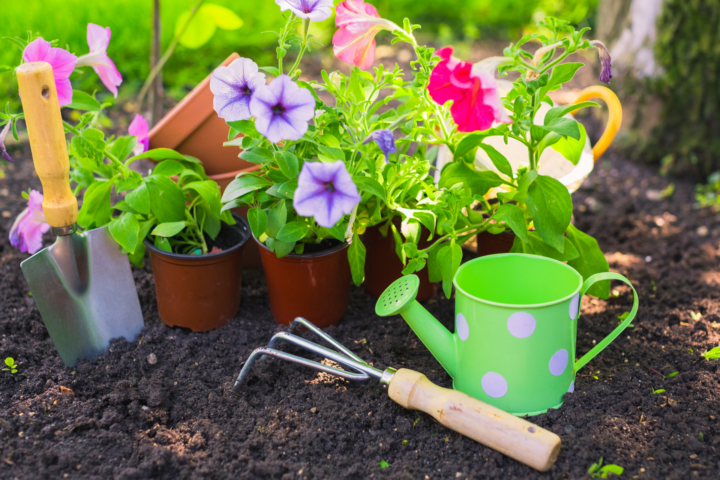
When we use the word stewardship in the church, it is often in the Fall and we are talking about budgets, pledge cards, and financial campaigns. While generosity with financial resources is certainly part of stewardship, the biblical vision of stewardship is much broader and deeper. Stewardship is really about discipleship; it is about how we cultivate our lives, our communities, our relationships, and our faithfulness in response to God’s grace.
The lectionary texts for July invite us into the rich agricultural imagery of Matthew 13, where Jesus teaches through parables about seeds, soil, weeds, harvests, yeast, and hidden treasure. These are earthy, practical stories that would have resonated deeply with the farming communities of the ancient world and still resonate in agricultural communities today, including my own community. Jesus reminds us that the Kingdom of God often grows slowly, quietly, and unexpectedly, and that we are called to cultivate those Kingdom values in our daily lives.
These passages also arrive during a season when many churches and pastors feel weary. Congregations continue to navigate anxiety, polarization, uncertainty, and change. Many churches are asking difficult questions about identity, mission, sustainability, and the future. Into that reality, these parables also speak a word of hope. God is still at work cultivating the Kingdom, often in ways we cannot fully see or control.
Perhaps that is one of the central stewardship lessons of these July texts. We are not called to manufacture the Kingdom of God through our own effort or anxiety. We are called to cultivate it faithfully. We plant seeds. We tend the soil. We nurture relationships. And we trust God with the growth.
July 5: Rest for Weary Souls – Matthew 11:16-19, 25-30 and Romans 7:15-25a
Jesus concludes Matthew 11 with one of the most beloved invitations in all of scripture: “Come to me, all you that are weary and are carrying heavy burdens, and I will give you rest.”
That invitation feels particularly timely for many pastors and church leaders in these summer months that often have a different rhythm. Ministry can become exhausting. Churches often feel pressure to do more, fix more, solve more, and produce more. Many Christians carry around spiritual exhaustion alongside the burdens of work, caregiving, grief, political division, and economic uncertainty. The stewardship connection here may not seem obvious at first, but perhaps one of the most important things we are called to steward is our own souls.
Many Christians are very good at serving others but not very good at receiving rest, grace, and care for themselves. Yet stewardship of life includes stewardship of our emotional, spiritual, and physical well-being. Sabbath itself is an act of stewardship. Rest is not laziness. Rest is trust in God.
Romans 7 also provides a painfully honest reflection on human struggle: “I do not do the good I want, but the evil I do not want is what I do.” Paul’s words remind us that stewardship is not about perfection. Faithful discipleship is not about flawless performance, it is about honesty, humility, repentance, and dependence on grace.
In a culture that often rewards outrage, certainty, and self-righteousness, these passages invite Christians into a different posture. We do not have to pretend we have everything figured out. We can acknowledge our weariness and our limitations. We can rest in the grace of God.
Perhaps our churches need to hear this reminder as well. Stewardship is not simply about squeezing more productivity out of exhausted people. Healthy stewardship cultivates sustainable discipleship, joyful service, healthy relationships, and communities where people can breathe, rest, and heal.
July 12: Cultivating Good Soil – Matthew 13:1-9, 18-23 and Romans 8:1-11
The Parable of the Sower may be one of Jesus’ most familiar agricultural parables. Seeds are scattered broadly, but the results vary depending on the condition of the soil. This is a powerful stewardship image because stewardship is ultimately about cultivation. Farmers know that healthy crops require attention to the condition of the soil. In the same way, churches and disciples are called to cultivate the spiritual soil of our lives and communities.
Some soil becomes hardened. Some becomes shallow. Some becomes crowded with weeds and distractions. Jesus specifically warns about “the cares of the world and the lure of wealth” choking spiritual growth. That warning feels remarkably contemporary and relevant.
Many congregations today are wrestling with anxiety about finances, attendance, politics, institutional decline, and cultural change. Individuals are overwhelmed by nonstop news cycles, social media outrage, and the pressure to constantly produce and consume. These anxieties can crowd out joy, compassion, generosity, and spiritual depth.
The stewardship question raised by this parable is not simply “What are we giving?” but “What are we cultivating?”
Are we cultivating fear or hope? Scarcity or abundance? Outrage or compassion? Isolation or community?
Romans 8 provides a beautiful companion to this text because Paul reminds us that “there is therefore now no condemnation for those who are in Christ Jesus.” Stewardship begins not with guilt but with grace. The Spirit is already at work bringing life, freedom, and transformation.
Good soil does not happen accidentally. It requires intentional cultivation. Churches can cultivate good soil when they create spaces for prayer, worship, fellowship, music, service, hospitality, learning, and honest conversation. Individuals can cultivate good soil through spiritual practices that root ourselves in God’s presence. The hopeful news of this parable is that even small seeds planted in good soil can bear abundant fruit.
July 19: Patience in an Imperfect Field – Matthew 13:24-30, 36-43 and Romans 8:12-25
The Parable of the wheat and the weeds speaks directly into our polarized and impatient age. In the story, the servants want to immediately pull up the weeds growing among the wheat. The landowner, however, urges patience: “Let both of them grow together until the harvest.”
That is difficult advice for people who want clarity, purity, and quick solutions. We often want to sort people neatly into categories of good and bad, righteous and unrighteous, insiders and outsiders. Churches are not immune to this temptation. Political polarization has increasingly shaped congregational life, and many communities struggle to hold together people with differing perspectives and experiences. Yet Jesus paints a picture of patient coexistence and trust in God’s ultimate judgment.
This does not mean ignoring injustice or abandoning accountability. But it does remind us that human beings are not always very good at distinguishing wheat from weeds. We see only partially. God sees fully.
Stewardship in this context includes stewarding relationships and stewarding community. It means resisting the temptation to write people off too quickly. It means creating space for growth, repentance, dialogue, and transformation. It means remembering that God is still at work in people whose lives may look messy or incomplete.
Romans 8 expands this vision outward to include all creation: “the whole creation has been groaning in labor pains until now.” Paul recognizes that the world itself is aching for redemption and renewal. That image of groaning creation invites a broader understanding of stewardship that includes care for the earth, concern for vulnerable communities, and long-term investment in the common good. Cultivating the Kingdom includes tending not only our churches but also our neighborhoods, ecosystems, institutions, and relationships.
The farmer in Jesus’ parable understands something essential. Growth takes time. Transformation takes time. Harvests cannot be forced. Faithful stewardship requires patience.
July 26: Small Seeds and Hidden Treasure – Matthew 13:31-33, 44-52 and Romans 8:26-39
Jesus closes this section of parables with a series of images about surprising abundance. A tiny mustard seed becomes a large shrub. A small amount of yeast leavens an entire batch of flour. A treasure hidden in a field changes someone’s entire life. A pearl of great value inspires radical commitment. These parables remind us that the Kingdom of God often begins in small and easily overlooked ways.
Many churches today feel discouraged because they compare themselves to larger congregations, larger budgets, or larger cultural influence. But Jesus consistently points toward small beginnings and hidden growth. The Kingdom often grows quietly through ordinary acts of faithfulness:
- A congregation that hosts a weekly meal for neighbors.
- A Sunday school teacher who faithfully shows up every week.
- A church member who visits someone who is lonely.
- A youth leader who listens patiently to teenagers.
- A church that chooses compassion over conflict.
- A pastor who continues planting seeds of hope in difficult times.
These things may seem small in the eyes of the world, but Jesus says the Kingdom grows precisely this way.
Romans 8 ends the month with one of the most powerful affirmations in scripture: nothing will be able to separate us from the love of God in Christ Jesus our Lord. That promise is ultimately the foundation of Christian stewardship. We do not give, serve, love, or cultivate the Kingdom in order to earn God’s love. We do these things because we have already received it.
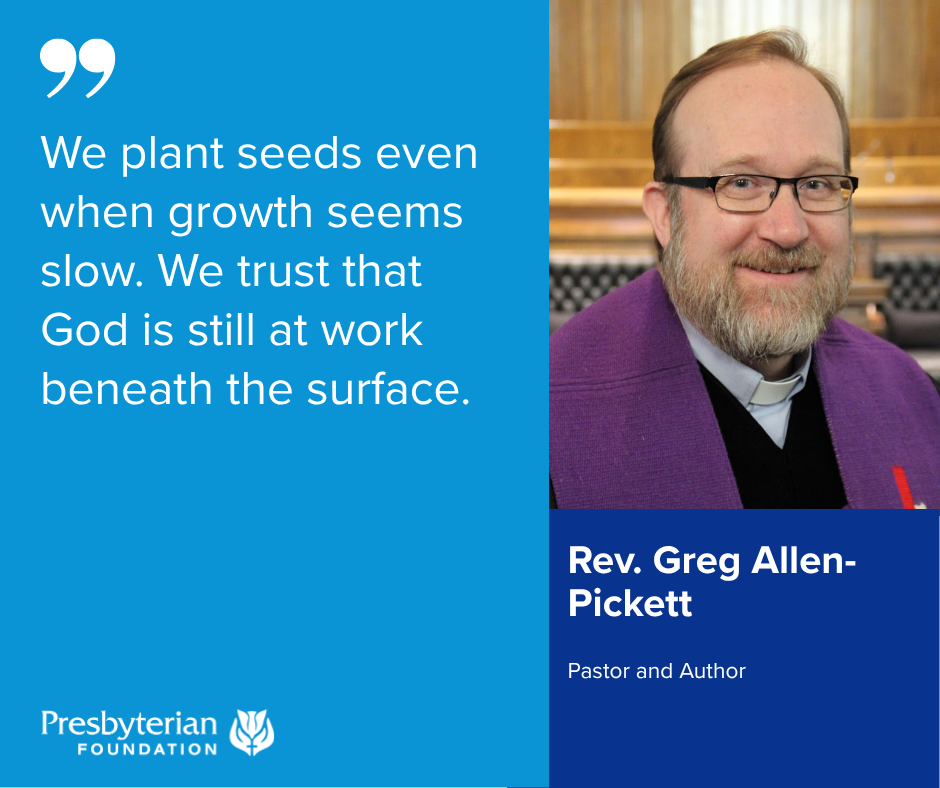
We steward our lives because God has entrusted us with gifts, relationships, communities, resources, and opportunities to participate in the work of the Kingdom. We plant seeds even when growth seems slow. We trust that God is still at work beneath the surface.
In a season when many churches feel anxious about the future, these July lectionary texts offer both comfort and challenge. The Kingdom of God is still growing. Seeds are still being planted. The Spirit is still at work bringing life out of weary soil. Our calling is not to control the harvest, our calling is to cultivate the Kingdom faithfully, patiently, generously, and hopefully.
I want to conclude with one of my favorite prayers written by the late Bishop Ken Untener of Saginaw, referred to as the “Oscar Romero Prayer” because it reflects on Archbishop Romero’s humble and prophetic approach to ministry:
It helps, now and then, to step back and take a long view.
The Kingdom is not only beyond our efforts,
it is even beyond our vision.
We accomplish in our lifetime only a tiny fraction
of the magnificent enterprise that is God’s work.
Nothing we do is complete,
which is a way of saying that the Kingdom always lies beyond us.
No statement says all that could be said.
No prayer fully expresses our faith.
No confession brings perfection.
No pastoral visit brings wholeness.
No program accomplishes the Church’s mission.
No set of goals and objectives includes everything.
This is what we are about.
We plant the seeds that one day will grow.
We water seeds already planted,
knowing that they hold future promise.
We lay foundations that will need further development.
We provide yeast that produces effects far beyond our capabilities.
We cannot do everything,
and there is a sense of liberation in realizing that.
This enables us to do something,
and to do it very well.
It may be incomplete, but it is a beginning, a step along the way,
an opportunity for the Lord’s grace to enter and do the rest.
We may never see the end results,
but that is the difference between the master builder and the worker.
We are workers, not master builders;
ministers, not messiahs.
We are prophets of a future that is not our own.
Amen.

Rev. Greg Allen-Pickett
Rev. Greg Allen-Pickett is a pastor and author. Starting in August 2026, he will begin serving as senior pastor of Lake Grove Presbyterian Church in Lake Oswego, Oregon. In addition to writing for The Presbyterian Outlook, he recently published the book Purple Church, Red State: Finding Common Ground in an Age of Polarization, which explores how faith communities can resist division. In July 2026, he will conclude his service as senior pastor of First Presbyterian Church in Hastings, Nebraska. Greg’s diverse ministry background spans leadership roles in small, medium, and large churches, as well as serving as the general manager of Presbyterian World Mission at the PC(USA) denominational offices in Louisville. A native of Flagstaff, Arizona, Greg holds a Bachelor of Arts degree from Pacific Lutheran University and a Master of Divinity from Austin Presbyterian Theological Seminary.
 English
  Korean
  Spanish