
10/12/2026
Money follows mission: Connecting vision, values and stewardship
by Robyn Davis Sekula
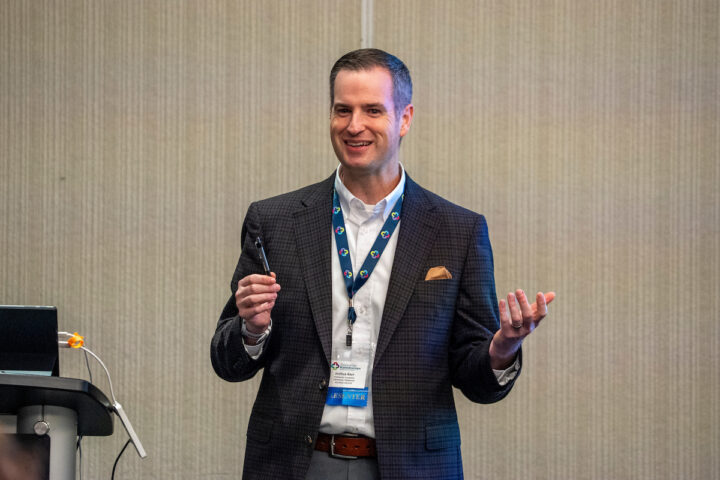
A clear sense of mission can do more than guide a congregation’s ministry. It can create energy, focus a church’s work, build unity — and inspire generosity.
That was the message from the Rev. Joshua Kerr, Ministry Relations Officer for the Presbyterian Foundation, during “Mission Statement, Core Values, and Stewardship,” a workshop presented Wednesday, Sept. 23, at Stewardship Kaleidoscope in Baltimore. Stewardship Kaleidoscope is an annual conference organized by the Presbyterian Church (U.S.A.) and the Evangelical Lutheran Church in America. The Presbyterian Foundation is a major sponsor.
Drawing on his experience as a pastor as well as his current work with congregations, Kerr encouraged church leaders to move beyond mission statements that sound good but have little connection to the day-to-day life of a congregation.
The value of mission and vision
Mission statements are valuable, Kerr said, because they can express a church’s theological foundation and reason for existing. But congregations also need a vision that answers a more immediate question: What is God calling this particular congregation to do in its community?
“A vision statement stirs our passion and it drives specific ministry actions,” Kerr said.
That distinction matters for stewardship because vision can help people understand what their church is trying to accomplish and how their time, talents and financial resources can contribute to it.
Kerr summed up the connection in a phrase he asked workshop participants to repeat with him: “Money follows mission.”
“Our vision helps define the scope of our vision. Values are those central pillars that hold the mission up, and all of those things help us to channel our passion for Jesus into the resources of time, talent, treasure that we need to accomplish that transformation,” Kerr said.
A vision for transformation
Kerr challenged congregations to think of vision as something more specific than maintaining the institution.
A church’s vision, he said, should describe the transformation it believes God is calling it to help bring about. That vision also needs to be revisited as congregations and communities change.
“If you still have the same vision statement from 25 years ago, in a highly digitized post-COVID, chaotically political world that we’re in now, I would consider it may be time to reevaluate that vision statement,” Kerr said.
Kerr said a compelling vision can create energy and help congregations move away from focusing primarily on scarcity and what they lack.
“When you genuinely love what you are doing, and you believe that you are making a real world difference, that’s your vision,” Kerr said. “Scarcity mindsets are plaguing our congregations so badly these days.”
Vision also creates unity, he said. Church members may disagree about any number of issues, but shared ministry can bring people together around a common purpose.
“If we’re handing out food from a food pantry, if we are tutoring children, if we are serving with this common passion driven by our church’s vision, then the things that divide us, just don’t matter that much,” Kerr said. “We’re keeping the main thing, the main thing.”
Vision also provides focus. Kerr noted that many congregations have fewer members than they did decades ago and may no longer have the capacity to sustain every program they once offered.
“We cannot be all things to all people,” Kerr said.
Rather than spreading limited people and resources across too many activities, a church can identify the ministries that most closely reflect its calling and concentrate on doing them well.
“It’s okay to focus the scope of our ministry based on our common vision,” Kerr said.
Showing what generosity accomplishes
That focus becomes particularly important when churches talk about stewardship.
Kerr encouraged congregations to move away from appeals centered primarily on meeting budgetary needs and instead show people what their giving makes possible.
He shared an example from First Presbyterian Church in Norman, Oklahoma, where the congregation’s stewardship materials included measures of its ministry, such as meals served, participation in worship, neighbors housed, Bible studies, new members and children attending camp.
Kerr described those measurements as a way of showing the congregation the fruit of its ministry.
“You are showing the fruit of your vision, of your mission, and saying, Hey, your donations are accomplishing all these things,” he said. “Celebrate this great work for Jesus, and allow the members of your congregation to own it. And keep it going.”
A call to serve Christ
One example came when a church began envisioning ways to better serve Christ in their community. The congregation envisioned serving the unsheltered population in their city, and an opportunity soon came knocking.
Just a few months after articulating that vision, a city-run night shelter temporarily closed because of a problem with a fire door, and the congregation was asked to shelter people who suddenly had nowhere to stay.
The pastor had already shared the congregation’s vision for caring for the unhoused with a long-time donor. The pastor called that donor, and shared that this new work would need about $2,500 to get started. Kerr recounted the donor’s response: “Okay, how about $20,000?” This gift empowered the congregation to respond quickly when the need arose.
“A vision inspired generosity”, Kerr said.
The story illustrated Kerr’s larger point: People can respond generously when they understand the ministry a congregation is trying to accomplish and can see the tangible difference their gifts can make.
The same principle can transform the way churches present their annual budgets.
“An area budget is nothing but telling the story of your ministry. It’s taking that hollow line item budget and translating it into a story of transformation through your ministry,” Kerr said.
Make stewardship a celebration
Kerr also encouraged pastors and stewardship committees to rethink the traditional stewardship sermon and Commitment Sunday.
Too often, stewardship season can become a routine administrative exercise centered on the need to fund the budget. Kerr suggested instead grounding stewardship preaching and communications in the congregation’s vision and celebrating what generosity makes possible.
“If commitment Sunday at your church is anything but a big party, let’s rethink that,” Kerr said. “Because it should be a celebration of the ministry we are doing, have done, and will be doing in the future.”
Core values can help churches tell that story consistently. Kerr described core values as the place “where conviction meets our culture.”
Those values help define how a congregation will pursue its vision. When mission, vision and values align, they can be reflected throughout congregational life — from preaching and worship to Christian education, community ministries, websites, social media and stewardship materials.
That consistency also communicates authenticity, Kerr said.
A prospective participant may first encounter a church online and then eventually visit in person. If the ministry that person encounters matches the identity the church presents publicly, Kerr said, it sends a powerful message.
“They really are who they claim to be,” he said. “And that’s the kind of community people are looking for.”
More than numbers
To illustrate how vision and values can be integrated into stewardship, Kerr created a fictional congregation.
The church’s vision centered on sharing God’s goodness with people on the margins of its community, supported by core values including radical hospitality, care for young people, living God’s grace and holistic generosity.
The hypothetical congregation tracked the results of ministries connected with those values — including meals served, tutoring hours, recovery meetings, emergency assistance, food pantry visits and pastoral presence with university students.
Those measurements could then become part of the congregation’s stewardship communications.
“These are more than numbers. They are signs of lives touched through expansive hospitality, care for all people, and holistic generosity,” Kerr said.
The approach shifts stewardship away from simply asking members to close a budget gap. Instead, people are invited to consider how they can participate in a shared vision for ministry.
For congregations that are struggling with low energy or uncertainty about their future, Kerr said churches do not necessarily need to begin with an ambitious long-range plan.
“I’m a huge proponent of making short term commitments in the congregation. Here is what we’re going commit to for 2027,” Kerr said.
Ministries that work can continue, allowing enthusiasm and support to grow around them. Other initiatives that don’t bear fruit can be pruned, making space for time, talent, and treasure to be invested in the next vision-driven goal.
Before closing with a prayer for the ministry of workshop participants, Kerr returned to the four things he believes a cohesive congregational vision can provide: energy, unity, focus and authenticity.
“A cohesive vision creates energy for the work ahead,” Kerr concluded. “It creates unity in the body of Christ. It creates focus so that we can keep our calling the main focus of our work. And it projects authenticity so that when people do check us out, they really find who we say we are.”

Robyn Davis Sekula
Robyn Davis Sekula is Vice President of Communications and Marketing at the Presbyterian Foundation. She is a ruling elder and member of Highland Presbyterian Church in Louisville, Ky. She can be reached at robyn.sekula@presbyterianfoundation.org.
 English
  Korean
  Spanish