
10/9/2026
Good governance of investments provides a foundation for faithful stewardship
by Robyn Davis Sekula
Churches often devote significant attention to how their investments perform. But before congregations decide what to invest in, they should answer another important question: How will they make those decisions?
That was the focus of “Good Governance = Good Stewardship: Creating a Sound Investment Policy,” a workshop presented Monday, Sept. 21, at Stewardship Kaleidoscope in Baltimore. Stewardship Kaleidoscope is an annual conference organized by the Presbyterian Church (U.S.A.) and the Evangelical Lutheran Church of America.
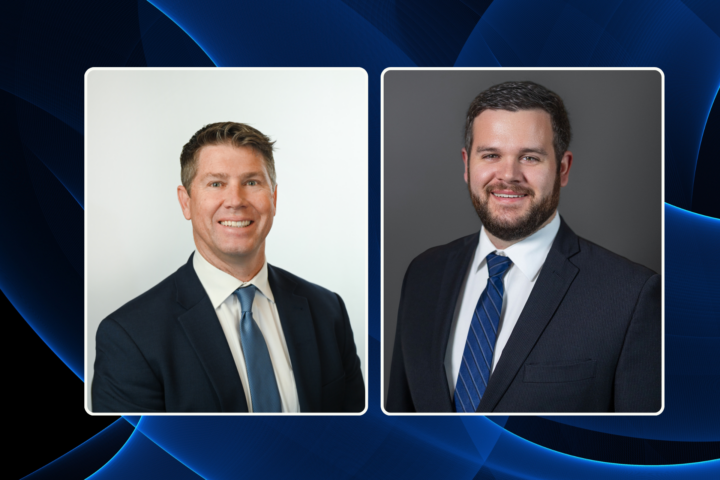
The workshop presenters were Ryan Cassidy, Assistant Vice President, Portfolio Manager, and Brad Masters, Vice President, Business Development & Financial Advisor, with New Covenant Trust Company (NCTC), a subsidiary of the Presbyterian Foundation.
Masters and Cassidy encouraged church leaders to think of investment governance as an essential part of stewardship — particularly because responsibility for church finances typically passes from one group of volunteers to another.

Brad Masters, Vice President, Business Development & Financial Advisor
“A rotating group of people talking about money that doesn’t belong to them automatically changes the rules,” Masters said.
Individual investors make decisions based on their own circumstances, experiences and tolerance for risk. A church investment committee, by contrast, must make decisions collectively about resources entrusted to the congregation for its mission, often with an eye toward generations to come.
That makes clear written policies particularly important, Masters said. Strong governance provides continuity as committee and session membership changes and helps a congregation articulate why it holds assets and how those resources should be managed.
Among the documents churches should consider are a committee charter, gift acceptance policy, conflict-of-interest policy, spending policy and investment policy statement.
A committee charter can spell out who serves, how members rotate on and off the committee and what responsibilities they hold. Masters also encouraged congregations to look first for committee members who understand and are committed to the church and its mission, rather than simply recruiting someone because of professional investment expertise.
A gift acceptance policy can help churches decide in advance what kinds of gifts they are prepared to receive. Gifts of property, vehicles or other unusual assets, for example, can bring expenses or liabilities along with their value.
A conflict-of-interest policy is equally important. Financial professionals within a congregation can bring valuable knowledge to a committee, Masters said, but churches should maintain appropriate distance between those offering advice and those who could benefit financially from managing church assets.
“It helps you to manage risk, builds trust in the congregation,” Masters said. “Honestly, it protects the individuals as well.”
Putting investment decisions in writing
An investment policy statement brings many of those governance principles together.
Masters said NCTC representatives routinely ask congregations whether they have an investment policy. Sometimes a church discovers it does — but it was written decades ago and has not been reviewed recently.
An effective investment policy should identify the congregation’s goals, time horizon, tolerance for risk, allowable investments, performance expectations and any values-based investment requirements.
The policy does not need to be complicated, Cassidy said. Its value comes from giving current and future leaders a common framework for decision-making.
“We want to have something in writing because we want something to reference,” Cassidy said. “We want something to hold ourselves accountable to as well.”
Cassidy walked participants through some of the fundamentals that inform an investment policy, including the differences among stocks, bonds, cash and alternative investments. Each carries a different relationship between risk and potential return.
For churches, determining an appropriate mix begins with three questions:
- What are the goals for the money?
- What is the time horizon?
- And what is the congregation’s tolerance for risk?
Those questions matter because not all church funds serve the same purpose. Money needed to pay immediate expenses should not be invested in the same way as an endowment intended to support ministry decades into the future.
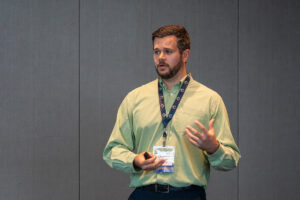
Ryan Cassidy, Assistant Vice President, Portfolio Manager
Cassidy suggested thinking about assets in time-based categories. Funds needed immediately belong in checking or savings accounts. Money that will be needed within one to three years generally calls for conservative investments. Assets with a three- to seven-year horizon can assume somewhat more risk, while long-term funds can be positioned to weather market cycles and pursue greater growth.
The longer the time horizon, the greater a portfolio’s ability to withstand periods of market volatility.
Diversification matters
Cassidy also emphasized diversification — spreading investments across different asset classes and holdings rather than relying on a small number of investments.
Using a farming analogy, he described diversification as lending seed to several farms rather than just one. One farm may suffer a poor harvest while another thrives. The investor gives up the possibility of having everything invested in the single best-performing farm, but also reduces the consequences of choosing the worst-performing one.
For congregations, the lesson is particularly important because church assets are intended to support ministry rather than speculative investment.
“This is church money,” Cassidy said. “This is money that we want to have around for a long time. We want to be invested in a sustainable, responsible manner.”
Masters said congregations often begin investment conversations with a conservative bias, in part because committee members recognize they are caring for resources that do not belong to them personally.
That instinct can be healthy, he said, but it should be paired with education about the purpose and time horizon of the assets. Being too conservative with money intended to last for decades can present its own challenges.
Spending for today — and tomorrow
Good governance also requires churches to decide how investment assets will be used.
Cassidy discussed sustainable spending policies for endowments and other long-term funds. Ideally, he said, a congregation should establish a spending rate that allows it to support ministry today while preserving the purchasing power and long-term viability of the fund.
NCTC generally recommends focusing on a percentage of a portfolio’s value rather than a fixed dollar amount and using an average portfolio value over several years to smooth out market fluctuations.
The workshop illustrated how seemingly small differences in spending rates can produce dramatically different outcomes over decades. A sustainable spending policy can allow a congregation to make distributions for ministry while still giving the underlying assets an opportunity to grow. Spending too aggressively can gradually erode the fund and eventually reduce the amount available for ministry.
Investments can reflect a church’s values
The speakers also encouraged congregations to consider whether their investment policies reflect their theological and missional commitments.
NCTC can help congregations incorporate values-based investing through screening, shareholder engagement and impact investing.
Screening allows investors to exclude companies or industries that conflict with their values. Engagement uses the rights of shareholders, including proxy voting, to encourage companies to change policies or practices. Impact investments seek both financial returns and measurable benefits for communities or other social purposes.
Cassidy said values-based investing gives congregations another way to connect their financial resources with their mission.
“These are investments that we really want to be able to tell a story about,” he said. “This is the work that we’re trying to do with our investments. This is the story we’re trying to tell. This is the legacy we’re trying to leave behind.”
The Presbyterian Foundation votes proxies for companies it holds, Masters said, and works alongside other faith-based investors to encourage changes in corporate practices.
For congregations that want values-based considerations incorporated into their portfolios, the speakers stressed that those expectations should be clearly articulated in the investment policy.
Ultimately, Masters and Cassidy said, good investment governance does not have to mean creating an elaborate set of rules. The goal is to establish clear principles that can guide decisions consistently even as pastors, elders, committee members and financial leaders change.
A sound policy can also strengthen donor confidence by showing members that gifts entrusted to the church will be managed carefully and in keeping with the congregation’s mission.
For Masters, that is where governance and stewardship intersect.
Churches are not simply managing portfolios. They are caring for resources entrusted to them to sustain ministry — today and well into the future.
Robyn Davis Sekula
Robyn Davis Sekula is Vice President of Communications and Marketing at the Presbyterian Foundation. She is a ruling elder and member of Highland Presbyterian Church in Louisville, Ky. She can be reached at robyn.sekula@presbyterianfoundation.org.
 English
  Korean
  Spanish