
10/5/2026
Take a planned, methodical approach to church stewardship
by John C. Williams
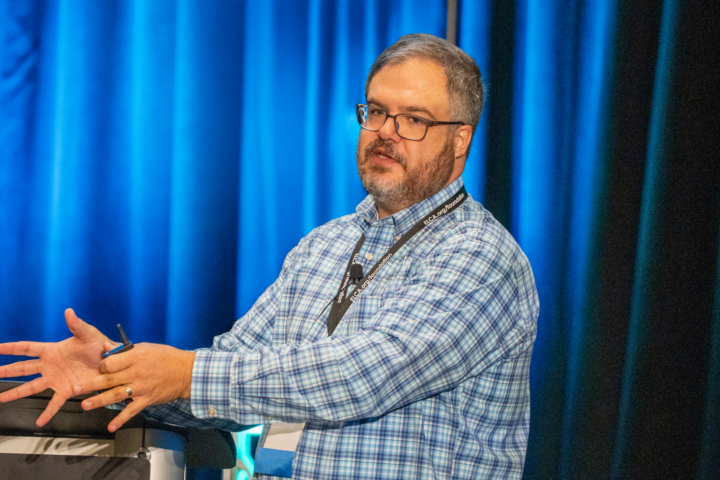
Using a strategic, targeted approach is essential when it comes to connecting church members through their financial gifts, said Ryan Ebner, regional gift planner with the Evangelical Lutheran Church of America Foundation.
Stewardship can be a both/and proposition, of helping God’s people grow in their relationship with Jesus through the use of the time, talents, and finances along with raising enough money for the church to pay its bills next year, he said during a workshop at Stewardship Kaleidoscope on Sept. 22. The annual conference is presented by the Presbyterian Church (USA) and Evangelical Lutheran Church in America.
“It’s easy to get caught up in that ‘paying the bills, paying the bills, that’s all our focus is.’ But make sure you keep your mindset that you are a good steward, a good caretaker of the things that God has entrusted to you,” Ebner said.
He cited Charles Lane’s definition of stewardship in a congregational context: “Seeing God as the source and God’s children as the caretakers of all that is under our care.”
He recommended taking the approach of “Inform, inspire and invite” when it comes to stewardship – plus the thank-you.
Rather than focusing strictly on year-end financial asks, such as the traditional “stewardship campaign,” his workshop encouraged congregations to structure continuous engagement throughout the year.
That can be done through the stewardship committee, finance committee or endowment committee, or all of them. The point is to create and share “touchpoints” throughout the year about generosity.
It’s not about the number of emails sent out or articles in the newsletter or bulletin, Ebner said, but rather how many are received. Sometimes that requires breaking down groups for specific approaches:
- Church members ages 70 and older might be invited to learn about estate planning and ways to bequeath stocks or other retirement savings to the church.
- Members in their 20s and 30s, starting their careers and families, deserve a different approach that understands their financial challenges but encourages them to participate in the church and to give generously as they are able.
- Some church members may want a personal meeting in their home, especially if they have made substantial gifts before or are still new and learning about the church community.
To inform, Ebner proposed using multiple platforms, including the church newsletter and emails, annual report, endowment impact statements or updates, and social media. Share relevant news, introduce concepts of stewardship and do this at least every other month, he said. This element also can be used to introduce the idea of gifting stocks or through an IRA.
To inspire: Find a leader or elder in the congregation who can speak about their heart’s connection to the ministry and why they give. Elaborate on how giving connects to the church’s mission statement, he said.
When a church receives a bequest, with the understanding of the family, tell their story and the impact of the gift, Ebner said. “What are you able to do now that couldn’t prior” to receiving the bequest?
With the invite, Ebner said to ask members to put their faith into action through mini-appeals, annual pledges, attendance at upcoming church activities and through hosting a legacy workshop.
An element too often forgotten, he said, is the simple thank-you. He encouraged thank-you notes to all annual gifts of $250 or more, members with planned gifts, to all volunteers throughout the year, to acknowledge pledges or promises to give and for all endowments.
“I know that people aren’t giving to get thanked,” he said. “But when you know that your gift, your participation, is acknowledged, it inspires more. There is no harm you can possibly do by thanking them.”
Finally, Ebner said it’s critical to track all of this. “It’s not necessarily about how many (invites) you send, but how many are received by someone. It is up to you to segment your lists and target specific messages to specific groups of people.”
To help organize an annual schedule, Ebner provided blank templates that are available on the Stewardship Kaleidoscope 2026 website. You can also find a free stewardship program including templates on the Presbyterian Foundation owned website www.stewardshipnavigator.com. The code to use the website is PCUSA.
John C. Williams
John C. Williams is a veteran writer with his own PR firm specializing in helping K-12 education, government and non-profits tell their story. He is a 30-year member at Sea Island Presbyterian Church in Beaufort, South Carolina.
 English
  Korean
  Spanish