
11/3/2025
Stewardship in small churches doesn’t have to be difficult
by Robyn Davis Sekula
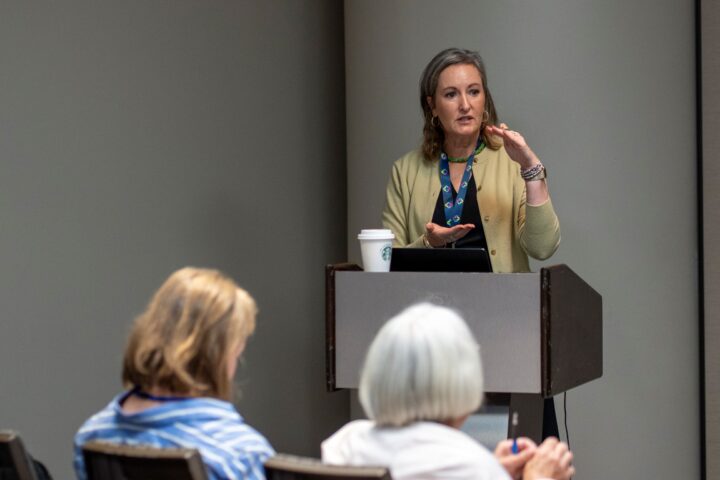
Maggie Harmon began her workshop at Stewardship Kaleidoscope with a simple aim: to guide participants in creating a stewardship plan.
But the conversation quickly turned into something more. The audience leaned in with ideas, questions, and stories of their own, so much so that the workshop became a shared exploration of what stewardship really means in congregational life. And Harmon, a ruling elder at First Presbyterian Church in Oakland, California, was happy to let it happen.
“The big thing I want you to take away,” Harmon told the group, “is that it doesn’t have to be that hard, and it doesn’t have to be perfect.”
Redefining Stewardship
Harmon reminded participants that many people immediately associate stewardship with money. “When you say we’re going to talk about stewardship, they grab their wallets,” she said with a smile. “They think you’re coming for their money.”
But scripture paints a broader picture. Drawing from Genesis 2:15, she noted that stewardship is tending, caring, and helping something grow.
“Generosity and offering aren’t the same thing,” she added. “Generosity is the readiness to give more than expected. An offering is a sacrifice ceremonially offered as part of worship. What if we asked people to take a moment, breathe, and think about what we are asking them to do? What is the ritual around it – not the habit?”
Practical Wisdom for Small Congregations
Harmon spoke from the perspective of a small church. First Presbyterian in Oakland averages 60 in worship. Most churches in the PC(USA) are under 100 members, she pointed out, and the majority of stewardship teams are only one or two people. That makes planning both critical and doable.
For pledge campaigns, Harmon advised congregations to give themselves two to three months of preparation and keep the active campaign to four to six weeks. “Longer than that and people get tired. Shorter, and you risk missing folks,” she said.
Choosing a theme rooted in scripture, writing clear letters, and setting specific goals all help congregations focus their efforts.
“The compelling story is not ‘the electric company raised our rates,’” Harmon emphasized. “The message is we want to create a welcoming worship space everyone is comfortable in.”
Letters that Inspire, Not Overwhelm
Harmon walked participants through the anatomy of an effective stewardship letter:
- Start with scripture. Ground the appeal in God’s Word.
- Celebrate accomplishments. Highlight three to five ways the congregation’s gifts made a difference in the past year.
- Cast vision. Name two or three aspirations for the coming year, with scripture as the guide.
- Be specific in the ask. Don’t shy away from inviting people to pledge their gifts of time, talent, and treasure.
- Give thanks. Repeat the ask and always close with gratitude.
“Pick three to five highlights,” Harmon said. “You’ll want to list 20, but don’t. Keep it clear, keep it simple.”
Stewardship All Year Long
Beyond annual campaigns, Harmon encouraged congregations to weave stewardship into year-round communication. Monthly or biweekly notes in bulletins and newsletters, reflections on generosity, updates on ministry goals, and reminders about legacy giving all keep the conversation alive.
“What I like to do is sit down and map it all out at once, so I know the rhythm of the year,” Harmon said. “Stewardship isn’t a season. It’s part of how we live as God’s people.”
The workshop was filled with engaged dialogue: a pastor asked how to handle snowbirds who split time between two churches, another leader shared how their stewardship planning began months before their new pastor arrived, and yet another cited Habakkuk 3:17–18 as a text for a campaign in uncertain times.
The energy in the room reflected Harmon’s central message, that stewardship is not simply about balancing a budget, but about grounding a congregation’s life in faith, generosity, and trust in God’s provision.
Robyn Davis Sekula
Robyn Davis Sekula is Vice President of Communications and Marketing at the Presbyterian Foundation. She is a ruling elder and member of Highland Presbyterian Church in Louisville, Ky. She can be reached at robyn.sekula@presbyterianfoundation.org.
 English
  Korean
  Spanish