
10/28/2026
Relationships, readiness key to generous gifts as wealth changes hands
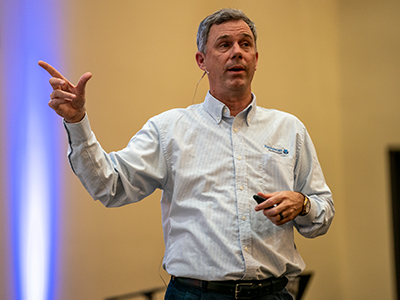
Presbyterians have traditionally placed a high value on education. As the wealth of the Baby Boomer generation continues to transfer and the wealth of succeeding generations increases, Presbyterian institutions could be at the head of the class.
Karl Mattison, Vice President of Philanthropic Solutions for the Presbyterian Foundation, explained how in “The Great Wealth Transfer: Opportunities and Strategies for Presbyterian Colleges and Universities,” a webinar presented by the Foundation for the Association of Presbyterian Colleges and Universities.
How much wealth are we talking about? Mattison said that through the year 2048, $124 trillion will be expected to transfer from one generation to the next.
“That’s equivalent to the value of every home in America, every stock on Wall Street and then double that. Just five years ago it was $84 trillion,” he said.
Education was the fastest-growing area of giving in 2025, and a bequest is the largest gift most donors make.
“Most causes meet a donor at a moment in life, whereas colleges help shape who we become,” Mattison said. “Why do alumni leave estate gifts? It’s not tax planning. It’s gratitude, it’s legacy and it’s impact.”
Common ingredients for success
Organizations with a strong pipeline of planned gifts have a compelling “why” that is answered in their missions, actions and people.
“It’s what the planned giver yearns to accomplish through us,” Mattison said, so planned givers need to see that the institution is their opportunity to continue answering this “why.”
Planned giving also needs to be visible. “If it shows up everywhere, it tells potential givers we’ve thought about this a lot and we know what to do with these gifts.” It also keeps the option front of mind when they sit down to revisit their plans.
It also needs to be organization-wide, Mattison said. People outside of the advancement office of a college or university should be ready to respond when a curious donor shows gratitude for the past or interest in the future of the organization.
Relationship-driven engagement is important before and after the gift. A donor is “an invested partner in getting our mission done and should feel like one, not the source of a transaction,” Mattison said.
Ideas for those with limited advancement resources
Educational institutions without, say, a planned giving coordinator or major gifts officer still have plenty of time- and cost-efficient options, Mattison said. These include:
- Make planned giving visible everywhere: “Repeating something inspirational, memorable and often is how you are in the room when they decide and when they act.”
- Know your slam dunks, such as beneficiary designations from IRAs and retirement plans.
- Start a legacy society; this can draw its name from the college’s founder, history or even a phrase in its mission statement. “Invite everyone who’s included the college in their plans or is thinking about it, and regular or major givers,” Mattison said.
- Have a simple form, on paper and on the website, for donors to document their intentions.
Ideas for those with more resources
Colleges and universities with advanced planned giving programs may be more likely to consider these:
- Build a documented expectancy program; known intentions are far more likely to turn into actual gifts, Mattison said. “What you can see, you can steward.”
- Have a messaging cycle, perhaps quarterly, in which only one of every four messages is the ask. The other messages can build up to the ask by thanking recipients for gifts given already and talking about continuing important work even after one’s lifetime.
- Build a cloud of advocates — staff, board members and more — who can respond at peak moments. For example, a scheduler at an eye clinic responded to a client’s gratitude by giving him information about how to contribute so that others may benefit, Mattison said. That resulted in planned gifts from the client and his wife and from Mattison and his mother, who were standing right behind them. “If they had called us a week later and wanted to talk about a planned gift, the likelihood that we would pursue that was much lower,” he said.
Learn more about the Foundation’s legacy giving resources here or by contacting your Ministry Relations Officer.
 English
 Korean
 Spanish