
9/25/2018
Pastoral care in stewardship
by Robyn Davis Sekula
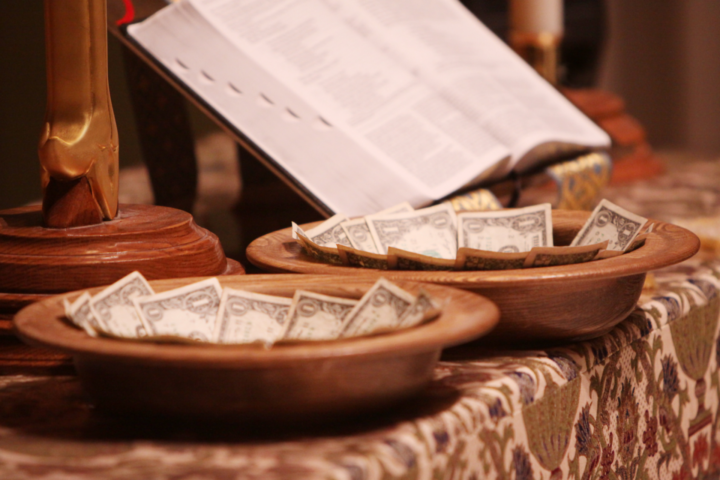
A lot of pastors approach stewardship with reluctance and trepidation, said the Rev. J.C. Austin, pastor of First Presbyterian Church in Bethlehem, Pennsylvania.
He’s heard of a church whose pastor gives one sermon each year on stewardship, and that sermon opens with the pastor saying he hates giving the annual stewardship sermon.
There are obvious problems with a pastor who only discusses stewardship with a congregation once a year, Austin said. Beyond that, Austin has studied why some pastors resent having to address stewardship from the pulpit. “What I realized was that a lot of pastors who felt the most frustrated felt that way because they felt like it was taking away from pastoral ministry,” Austin said. “Stewardship felt like at best a distraction if not an obstacle.”
But there is no division between pastoral care and stewardship. “Theologically our conviction is that Christ is the Lord of all,” Austin said. “God is sovereign over all things. We can’t have a division between the spiritual and the material. Our ministry is called to be much more than that.”
Austin spoke at Stewardship Kaleidoscope, the annual stewardship conference, this year held in St. Louis. The three-day conference provides both practical workshops for church leaders on how to create a stewardship program as well as a deep look at the theology of generosity and stewardship.
History of stewardship
The way that we talk about stewardship today is rooted in hundreds of years of history, Austin said. Churches were government supported until the Revolutionary War, and then were supported by the tithes of members who gave 10 percent of their “first fruits” to their churches, Austin said. “Pastors love tithing,” Austin said. “It’s 10 percent and you’re done.”
Tithing as a primary means of support for congregations faded, and was replaced by pew rents, Austin said. Eventually, pew rents went away, and now, churches primarily rely on the generosity of congregations during stewardship season (and beyond) for support.
But there are problems with how most church leaders discuss stewardship. “Stewardship has an implicit philosophy for some of scarcity,” Austin said. “That’s a real problem. The classic narrative is that we have limited resources, and we’ve been entrusted with them and you have to be very careful what you’re doing with them. That’s all about scarcity. That’s a helpful theology about budgeting, but that’s not stewardship.”
One of the other language issues surrounding stewardship is it often relies on agrarian metaphors, which few people in today’s pews understand. Fewer people are connected to farms, he said. Additionally, you can’t assume that your congregation members were raised in church and have an understanding of the importance of generosity and stewardship.
Reinventing stewardship
So how can churches change the conversation about stewardship? Austin invited his audience, mostly pastors, to recall how the Bible depicts God and Jesus as givers. “If we’re following Jesus, doesn’t it make sense to see how Jesus gives?” Austin asked.
The audience identified several stories of giving and generosity, many of which are frequently used in stewardship. Those are:
- Parable of the sower: A sower was tossing seeds on the ground with no regard to where the seeds landed.
- Parable of the laborers in the vineyard: Everyone got the same pay, no matter how long had been working that day.
- Parable of the talents: Workers were given differing amounts of money and told to be good stewards of it. The one who buried his money and didn’t take any risks with it was punished.
- The book of James: God is the giver of every good and perfect gift.
- John 3:16: God gave the ultimate gift.
Sermons must match stewardship language
Austin points out that sometimes pastors preach about stewardship and giving from abundance, but all of the other aspects of stewardship are about scarcity. “Don’t talk about the church’s budget,” Austin said. “Talk about the church’s mission. The budget is irrelevant to giving. It’s not an end, it’s a means.”
Talk about the ministries that embody the mission of the church. You’re not giving to the church, Austin said. You’re giving through the church.
Pastors and stewardship leaders may fear rejection from a member of the congregation if they seek a pledge or contribution. There are three types of negative responses: apathy, delay and anger. Each one of those may point the way to a pastoral care issue, Austin said. If a member of the congregation is angry at the pastor or church, you need to know and address the issue.
“The same skill set that helps you be a good pastor helps you be a good fundraiser, not in a manipulative way, because you have to believe this stuff,” Austin said. “If you don’t, then maybe you’re in the wrong line.”

Robyn Davis Sekula
Robyn Davis Sekula is Vice President of Communications and Marketing at the Presbyterian Foundation. She is a ruling elder and member of Highland Presbyterian Church in Louisville, Ky. She can be reached at robyn.sekula@presbyterianfoundation.org.
 English
  Korean
  Spanish