
10/17/2022
Meet people where they are in an increasingly diverse world
by Sissy Clayton Perryman
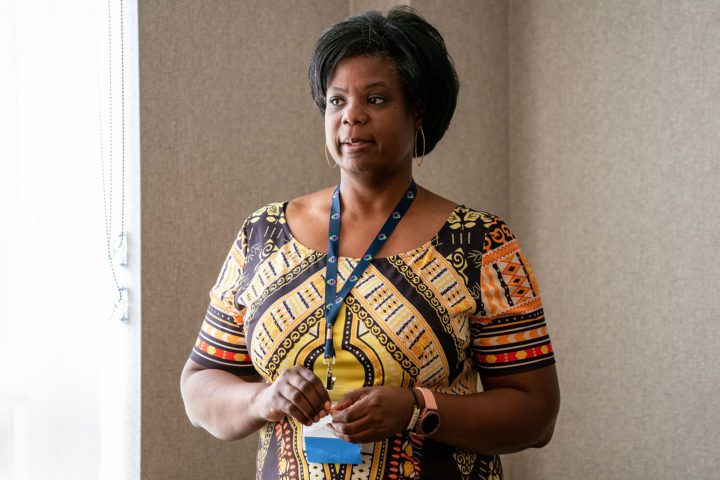
There is no one-size-fits-all approach to stewardship or generosity.
In a rich conversation about unleashing generosity in culturally-specific ways, Rev. Lucille “CeCee” Mills challenged pastors and church leaders during her workshop at Stewardship Kaleidoscope, an annual conference focused on stewardship, generosity and finances for churches. It was held both virtually and in person in Savannah, Ga., Sept. 26 to 28.
Mills serves as Assistant to the Bishop for Shared Ministry and Call Process of the North Carolina Synod of the Evangelical Lutheran Church in America, which partners with the Presbyterian Church (U.S.A.) on the Stewardship Kaleidoscope conference.
“Let’s spend time considering approaching generosity from the specific lens of the people gathered by giving both weight and respect to their lived reality, beliefs, tradition and values,” Mills said.
Many churches around the country are now made up of non-white people. This is an opportunity for church leaders to pay attention to congregational culture, identity and traditions that could be different from the dominant white culture in America. Other cultures have differing perceptions of abundance, wealth, and vitality.
Mills shared a personal illustration about the birth of her child. “My family doctor was checking him out when he was born and said he will probably be tall and skinny like his grandfather,” Mills recalled. “He then asked me to go home and get on the floor to crawl around so I could consider what a baby might access. So today, let’s be vulnerable enough to take off our identities and consider someone else’s point of view when it comes to generosity.”
Mills then shared five factors about community and individuals “that shape experiences to unleash generosity in a mode that is familiar and meaningful.” In other words, when it comes to fostering stewardship, meet people where they are in their specific life experience and culture, instead of assuming a dominant culture’s understanding of wealth and generosity.
History shapes financial attitudes.
For instance, how those who lived through the Great Depression view money or how those who were raised with one parent verses two parents view their long-term financial stability.
Ask the question: “How does their history shape their generosity?”
Symbolism and superstitions matter.
Dominant culture dismisses other culture’s symbols and superstitions – maybe it is an unlucky number or that endowments can never be touched.
Ask the question: “What cultural beliefs influence their generosity?”
Individualist and collective countries and cultures view money differently.
Some African and Caribbean communities take up a collection to benefit one person. For some in the dominant culture, this can feel suspicious.
Another example is that in dominant culture, it is a sign of shame to move back home as a young adult. But in many cultures, the idea of living with family is an honor.
Ask the question: “How does the community’s core values define how generosity is unleashed?”
Religious influences are important.
Many dominant culture churches do not talk about money. Mills said, “When we think about wealth, Jesus doesn’t say one nice thing about wealthy people.” How do we perceive ourselves? Is our comfort actually wealth? Could our wealth have come at someone else’s expense?
Ask the question: “What tenets of the community’s faith define their generosity?”
Every country is different, but the people are not all the same.
One assumption people often make is that everyone from a certain culture is the same. They are not. Churches and ministries shouldn’t have a cookie-cutter approach to stewardship within a culture. Listen to various stories within the community to give you a better view of their priorities.
Ask the question: “How are you making room for diverging viewpoints within the community?”
Towards the end of this workshop, Mills shared several tips in moving forward. Her most universal idea for the group was to really listen to and learn from the people they serve in order to unleash the generosity that exists in our diverse communities of faith.
Sissy Clayton Perryman
 English
  Korean
  Spanish