
10/9/2025
Create a right-sized planned giving program for your church
by John C. Williams
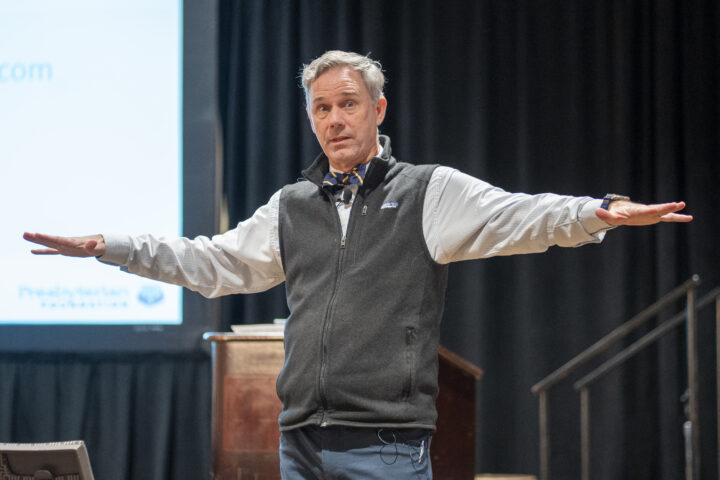
It’s a heavy task to talk to church members about how they want to be remembered when they die and if they want to include the church in their estate planning – but it’s a conversation many people want to have to give their end-of-life plans structure and legacy.
Karl Mattison serves the Presbyterian Foundation as the Vice President of Planned Giving Resources and of the Planned Giving Navigator Program. He shared his experience as a banker and Foundation leader in a workshop at Stewardship Kaleidoscope 2025 in New Orleans. The annual conference is presented by the Presbyterian Church (USA) and Evangelical Lutheran Church in America.
Using strong graphics and research, Mattison countered common perceptions about generations and their giving.
Planned giving is the process of donating planned gifts, also known as legacy gifts, which are arranged now but distributed at a future date. Commonly donated through a will or trust, planned gifts are usually granted when a donor passes away.
“This is the greatest gift I ever will make,” he said. “One day, we’re all going to die. Estate planning is us saying what means so much to me, that I care so much about, that I lie awake and I worry … is my most transformational gift.”
For most households, about 5% of total assets are in a form that’s readily available to spend on everyday purchases or charitable giving. The other 95 percent of assets are tied up in savings, investments, in home value, automobiles, furnishings we live with, and the IRA we can’t tap until a certain age.
“One day, every single one of us will be finished with all of that remaining 95 percent,” he said, which is when planned giving comes into play.
Mattison suggested that Presbyterian churches aim their planned giving program for people ages 45 to 65 as this is the time when most planned givers write their first planned gift. Don’t wait until they are in their 80s, he said, because by then they’ve made a will, decided how to allocate their estate and you likely will be too late.
Studies show that only about five percent of people leave a bequest to any charitable cause – but 28 percent would take that step if they were asked or reminded.
Another fact: Planned gifts average about 2.74 times a person’s lifetime annual giving.
And it is a common fear of the church that members planning a gift will decrease the amount they give annually. Not true, Mattison said. Planned giving doesn’t harm annual giving. In fact, annual giving often goes up 75 percent after someone makes a planned gift.
If your church doesn’t already have a program in place to talk to members about planned giving, Mattison shared these key points:
- A planned gift most often is the person’s largest gift of their life
- Givers are younger than we expect
- More churches are receiving planned gifts
- Planned giving is the only revenue category increasing in the Presbyterian Church (U.S.A.)
- Planned giving increases annual giving
- For most churches, planned giving is a relatively untapped way to help people connect the now to the forever with their church.
In the face of those opportunities, though, churches face increasing competition for charitable dollars, he said. Most universities have entire departments dedicated to contacting alumni to ask them to include the school in their estate planning.
In most churches, “our tactics have not changed from when there was no competition and when we were younger and simpler … Churches’ competitive advantage is having our audience meet within our walls every week,” Mattison said.
He recommended the stewardship team make an annual plan with regularly-spaced messages that won’t overwhelm or annoy the audience. It should include:
- 12 blurbs shared monthly in the bulletin, emails or social media about the benefits and ease of creating a planned gift
- 4 short articles about the process and how the church or Presbyterian Foundation can help
- 2 announcements about special events or small group meetings for more information
- 1 Legacy Sunday, typically in May, for detailed sharing about planned giving and how it relates to the donor’s legacy.
- And always – always – have planned giving information on the church website and in printed brochures.
John C. Williams
John C. Williams is a veteran writer with his own PR firm specializing in helping K-12 education, government and non-profits tell their story. He is a 30-year member at Sea Island Presbyterian Church in Beaufort, South Carolina.
 English
  Korean
  Spanish