
7/19/2024
Stewardship Tips: Helping children learn to give from the heart
by John C. Williams
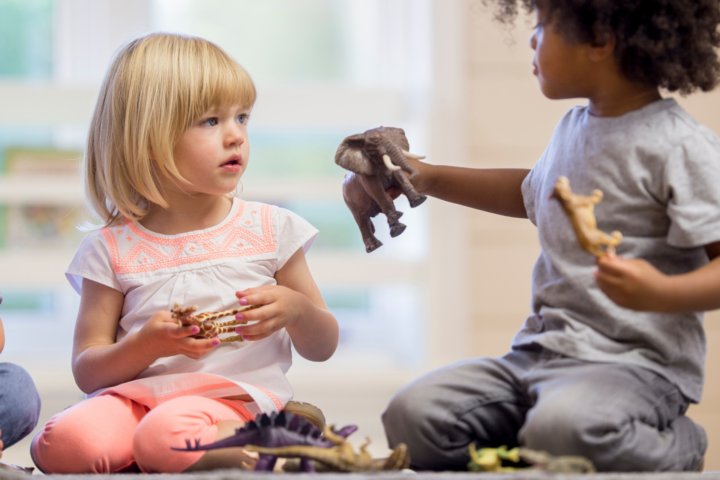
 At an early age, most children learn the lesson of sharing toys. It’s not the same thing as the lesson of giving, but it can be a step in their journey toward stewardship.
Sharing tends to be transactional – by assumption if not definition, the other party shares something back. Giving, though, is generosity, a gift – an equally important lesson for children and young people to learn, says Rev. Ellie Johns-Kelley, a ministry relations officer at the Presbyterian Foundation covering the Allegheny and Chesapeake region (most of Pennsylvania, West Virginia, Maryland, Delaware, and part of Ohio) working in the Southwestern Pennsylvania-West Virginia area.
Generational patterns of modeling generosity have shifted over time, and it is important for congregations and for families to be intentional about giving.
“The lessons we learn from early childhood resonate as we grow up,” she says, speaking from experience as a pastor and a mother. “For those not raised in that culture of giving, it is really a new part of a world view, to give freely.
“I encourage church leaders to help families think about how we respond to community and church needs,” whether through financial gifts, volunteering time and expertise, or some other contribution, she says.
The book “Three Cups” by Tony Townsley and Mark St. Germain is one Rev. Johns-Kelley uses frequently with children. The book’s premise is that teaching children how to save, spend, and be charitable is a simpler lesson than most people think – and it can have lifelong impacts.
The authors talk about the importance of setting aside earnings, from weekly allowance to chore money to salaries, into three cups: One for spending (on bills or on fun…), one for saving, and one for giving away to those in need. The last cup can include your church, a favorite local, regional or national non-profit, or even a family with a special need with a GoFundMe website.
“What does it mean to be people of generosity? How are we nurturing that in children? I love how ‘Three Cups’ breaks it down. It’s all related to the early lessons of sharing, but with the idea that you can give and not expect anything in return.”
It’s never too soon to start talking to children about generosity and helping those in need. Research shows that children raised in a culture of caring for others and giving will be more inclined to continue giving as their incomes grow in future decades.
A 2023 study of about 1,500 people by Fidelity Charitable, an independent public charity and grant-maker, shows that children follow in their parents’ charitable footsteps. The report shows that 81 percent of parents who give say their children under age 18 also participated in a charitable activity in the past year.
Further, 62 percent of parents who give also talk to their kids about giving and participate with them in planning, giving and volunteering. Parents in the study expressed interest in passing down the values of kindness, empathy, and generosity through giving, the study shows that parent-giving activity directly translates into increased participation among their children.
Philanthropic parents said their children under age 18 engaged in a range of activities in the study period, with 59 percent volunteering, 58 percent giving directly, 51 percent buying products to donate, and 43 percent making a monetary donation to a non-profit.
“The message we share in church, to young and old alike, is ‘all size gifts matter.’ It can be a percentage of a child’s allowance or from doing chores, but the important lesson is to give,” Rev. Johns-Kelley says.
John C. Williams
John C. Williams is a veteran writer with his own PR firm specializing in helping K-12 education, government and non-profits tell their story. He is a 30-year member at Sea Island Presbyterian Church in Beaufort, South Carolina.
 English
  Korean
  Spanish