
7/30/2024
It’s a new day for theological education, outgoing COTE chair says
by Nancy Crowe
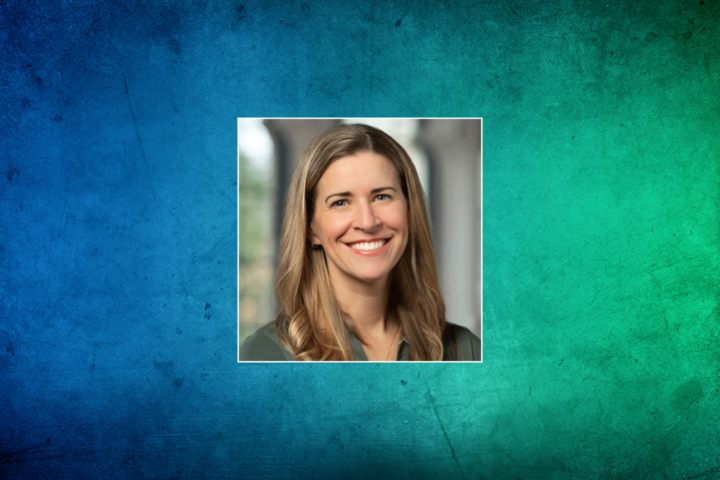
Theological education in the Presbyterian Church (USA) is stepping up to the upheaval of our time, said Rev. Dr. Katherine H. Smith.
“Our theological education institutions are innovative, responsive and responsible,” she said.
Smith recently rotated off the Committee on Theological Education (COTE) after serving two terms. An ordained Presbyterian Church (USA) minister, she chaired COTE and its Theological Education Fund Advisory Committee. She is Associate Dean for Strategic Initiatives at Duke University Divinity School in Durham, North Carolina.
Her years on COTE included COVID-19, a rapid move to online worship and education, economic challenges, political polarization, declining PC(USA) membership and more.
“What I’ve seen in the past eight years is how theological education is working to be creative, nimble and responsive to what they see in the changing landscape of religious practice,” Smith said.
Rev. Dr. Lee Hinson-Hasty, who worked with Smith during his time as Senior Director of Theological Education Funds Development, said she was a wonderful guide during many challenging moments. “Like a good sailor, Katherine provided a steady hand at the helm,” Hinson-Hasty says. “Her abundant grace, deep faith, and wise analysis kept COTE focused navigationally while being sure to take care of everyone on board. I am confident in saying the PC(USA)and our related seminaries and future ministers and congregations are better and will continue to grow because of her guidance.”
She refers not only to degree programs but a wide variety of lifelong learning and continuing education opportunities for pastors and lay leaders.
“That opened the doors to theological education for a number of audiences that previously wouldn’t have had the ability to access it.”
Watching the trends and times
Smith has seen theological educators both watch trends and respond to the needs and longings they hear from churches.
“That’s been a really exciting thing to watch. Each of our theological schools has unique expressions that come out of their distinctive strengths and locations,” she said.
She’s also been impressed with the PC(USA)’s stewardship of institutions that are critical to theological formation and human flourishing.
“They take that responsibility very seriously and seek to be good faith partners.”
Polarization, alienation, mental health crises, technologies and artificial intelligence are “some major moments we are having to wrestle with as we imagined what theological education looks like. I have been really honored to work with those who, both in their own lives and in their institutions, seek to embody gospel practice and therefore bear witness to it,” Smith said.
One mountain, many paths
Smith began her career with a nonprofit that placed graduating college students in yearlong fellowships with social transformation nonprofits around the country. Part of her job was to go and visit the fellows in their placements. There, she heard them describe the brokenness and hope they encountered.
“I heard them narrating what I would have described as mountaintop and valley moments,” she said. “I realized I needed a thicker vocabulary to engage those conversations.”
Theological education became her place to equip, encourage and send.
Smith was nominated for COTE by the Rev. Alan Bancroft, who had previously served on the committee and whom she’d met through her work as a faculty advisor for UKirk Nashville, a campus ministry for Belmont and Vanderbilt universities.
Theological education holds more options than you might expect: “I think people would be surprised to discover the breadth, flexibility and resources that are available for a variety of vocational paths through theological education,” Smith said, and anyone interested should explore them. “It’s a moment of real hope and promise for the relevance of the church in a world at a time when the world doesn’t recognize it.”
Tapping into that deep place of longing through theological education can take unconventional paths, Smith said. Secular professionals may seek to deepen their theological formation, for example. Other students may feel called to serve, but not in a traditional parish setting.
“We have students and graduates being sent all over the world to bring healing and transformation to communities that are crying out for it. So I think my encouragement would be not to assume that theological education takes only one form or has one destination.”
Help and hope are there
“Things are changing all the time,” Smith said, and there’s a breath of financial and vocation resources available through the churches, denomination and seminaries.
“I’d encourage the church to pray both for those who are have the courage to pursue and explore theological education and for the institutions that are journeying with them.”
Looking to the journeys ahead “resists the decline narrative that we hear so often and instead sees new expressions of vocation and new expressions of the church in the world. And, I think, a really hopeful witness to how that gospel changes lives and communities.”
Nancy Crowe
Nancy Crowe is a writer, editor, and animal wellness practitioner based in Fort Wayne, Indiana. She is a graduate of Louisville Presbyterian Theological Seminary. Send comments on this article to Robyn Davis Sekula, Vice President of Communications and Marketing at the Presbyterian Foundation, at robyn.sekula@presbyterianfoundation.org.
 English
  Korean
  Spanish