
3/27/2026
Appreciating the different ways of being church in the PC(USA)
by Mike Ferguson
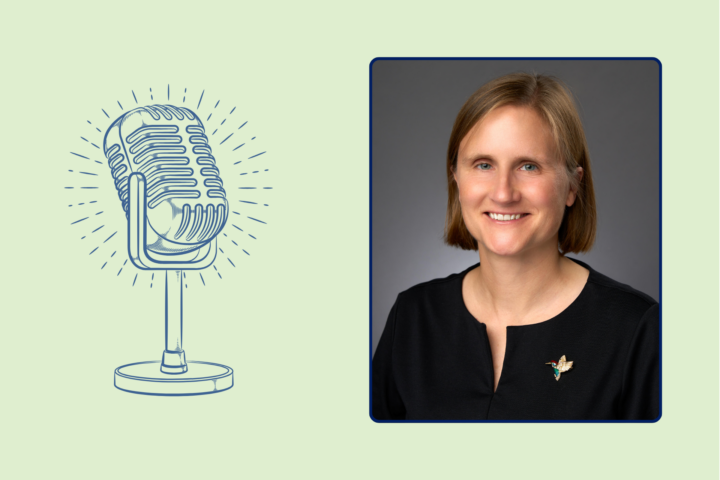
The primary work the Rev. Catherine Neelly Burton puts in with the Presbytery of Southern Kansas is with the 75% of churches in the presbytery with little or no paid leadership. Burton shared an update on how that work is progressing with the Rev. Bill Davis this week on the first episode of the eighth season of “Leading Theologically,” which is available here.
Davis is senior director for Theological Education Funds Development with the Presbyterian Foundation. During the current season of “Leading Theologically,” he’s exploring the theme “Everything Small Church.” Burton is Mission and Ministry Connector for the Presbytery of Southern Kansas. Last year, she spoke with the Rev. Sara Hayden on the New Way podcast. Those two episodes can be heard here.
On “Leading Theologically,” Burton invited listeners to do the math when it comes to PC(USA) churches being served by a pastor and those being served by someone else. Most Presbyterians go to a church served by a pastor, but most churches can’t afford a full-time pastor, she noted.
“Unfortunately for a lot of Presbyterians who can’t fathom being in a church without a pastor, a small church probably sounds like it’s dying,” she said. In the Presbytery of Southern Kansas, only two churches have 300 or more members.

The Rev. Bill Davis
Asked by Davis how she defines a healthy small church, Burton said she goes back to a PC(USA) publication, “7 Marks of Vital Congregations,” which includes these marks of congregational health: Lifelong Discipleship Formation, Intentional Authentic Evangelism, Outward Incarnational Focus, Empowered Servant Leaders, Spirit-Inspired Worship, Caring Relationships and Ecclesial Health.
“Honestly, those have nothing to do with staff and nothing to do with size,” she said. “Is the church focused more on what it’s called to do than it is on itself? Does it see a possibility in the future more than it thinks about what it used to be? Size isn’t an issue.”
Congregational health will look different from place to place, even across one presbytery. One church in the Presbytery of Southern Kansas picks an online sermon to listen to when they gather for Sunday worship and sings along with recorded music. “It’s Spirit-inspired worship, even though it’s not what a lot of Presbyterians think of as real worship,” Burton said.
“There’s very little performative membership in rural small churches,” she said. “You’re apt to be engaged in the theological depth of it.”
Figuring out what those churches need “gets distilled down pretty quickly,” she said. “At the end of the day, there’s not going to be a lot of fluff.” Generally, “there are people who love their church and want to learn how to lead them.” Many people in pastor-less congregations “are so receptive to being trained, to gaining more leadership and to understanding more about why we do things.”
For some of those leaders in training, “it’s, now we’ve equipped you in one way,” she said. “For others, it’s, OK, now would you like to sign up for a course at [the University of Dubuque Theological Seminary]? It’s very relational in a lot of ways.”
Dubuque Seminary created classes that commissioned ruling elders from the presbytery could take together, she said.
“It’s a lot like building a scaffolding,” Burton said. “You start where you are and you say, ‘OK, how can we train these folks?’”
It’s not like rural churches “don’t want pastors or don’t like pastors,” she said. “It’s because pastors stopped coming. It’s not the pastors’ fault and it’s not the town’s fault or the church’s fault. It’s the reality of changes in demographics and socio-economics in our nation.”
Burton says she thinks “a lot” about incarnation in her work. “If we say the church is the body of Christ, what does it mean for that church to be the body of Christ in their community?”
“We will be closing some of these churches in the coming years. We know this,” she said. “But there is great value in that presence of the body of Christ in that community.”
There’s “a lot of good in rural America, and it’s important the church shows up for them, too,” she said. Sometimes, churches in the presbytery will call the Rev. Dr. Beth McCaw, the dean of the University of Dubuque Theological Seminary, and ask her, “when are you going to send us a pastor?”
McCaw often replies, “when are you going to send us a pastor to train and send back to you?”
“Our smallest churches just aren’t going to attract someone from the outside,” Burton said.
The work she’s been doing within the presbytery has, she said, taught her a lot about what it means to be the church.
“When you’re in a really small church, you’ve got to distill it down: OK, we want to worship, and so we’ve got to figure out what that looks like. Maybe it’s a recorded sermon and maybe we sing a cappella,” she said. “Probably we’re going to do one more thing. That’s church, as opposed to, ‘what does church do for me?’ That’s a consumer model.”
“No one leaves worship at these small churches and says, ‘that was the best music I ever heard.’ What they leave saying is, ‘I got to sing my faith today,’” she said. “You know what? That’s the gospel right there. It’s taught me so much about what actually matters about church.”
In “Reclaiming Rural: Building Thriving Rural Congregations,” Allen Stanton points out that if you’re a church of 15 in a town of 400, “that’s a pretty big percent of the town,” Burton said. “Even though you’re a church of only 15, your impact can be pretty great.” Some of those churches “are feeding a huge percentage of their town with their food pantry,” she said.
One rural church in the presbytery embraced a model of children’s ministry for people who didn’t necessarily attend the church, “because there are kids in their community who need a Wednesday night program,” Burton said. “The smaller the church, the smaller the community, the more you have to let go of old ideas in a way that larger churches don’t.”
Some churches in the presbytery have benefitted from large bequests, and they’ve put that generosity to good use. One small church “is almost the community foundation of their town,” Burton said. If a child needs a pair of shoes or won’t be receiving a gift at Christmas, the social worker calls the church, which quietly meets the need.
Another church regularly puts on a community dinner that’s always well-attended and much appreciated. While some diners benefit because they’re on a tight budget, the rest of the community celebrates the gatherings “because it’s really fun to have dinner with your friends.”
The question for Burton has become, “How do we appreciate the different ways of being church?”
“There’s great value in all of it,” she said. During online gatherings of those leading worship in the presbytery’s smallest churches, “the good thing I’m hearing is the way people are sharing about their communities and their churches with others in the presbytery, and we hadn’t done that in a long time,” she said.
Upcoming editions of “Leading Theologically” can be seen here.
Mike Ferguson
 English
  Korean
  Spanish