
5/15/2025
Tell the story of your faith through estate planning
by Sherri Finke

When I was in my role with insurance companies before joining the Presbyterian Foundation, I was often called to join conversations with agents and clients about their estate plans. Most of these conversations were protecting business interests, providing income for families, utilizing insurance for estate taxes but rarely was their discussion about what their legacy will be.
The discussions and plans revolved around their money, but we didn’t have a conversation about how they could shape their legacies to benefit their church, share their beliefs or help their communities. When we sat down together, we talked about how they hoped their business would move forward at their death but not how their church could move forward without their pledge.
Now my focus is much different. The focus of these conversations is their hearts and how they want to be remembered. When we talk with donors, we work with them to help them discern answers to questions about what their legacy will look like when they are no longer with us. Their home church is a place that has shown love and care to them throughout their life, and when asked, many people want to leave a gift that establishes a testimony to their faith and helps support the congregation they love.
Legacy is a powerful word! How we will be remembered is probably one of the most powerful things most people hope to accomplish. It really goes far beyond talking about our possessions, even though that’s often the focus of estate discussions.
In my former job, I was often asked to join in meetings to deliver multi-million dollar checks to family beneficiaries. While I was offering millions, I recall a meeting where the beneficiaries had heated arguments over grandma’s bowl. Clearly, it held much deeper meaning for them than monetary value.
We need to get beyond “stuff” (including bowls) and ask better questions about legacy. The answers to these questions are quite complex.
While careful planning can be an important part of the legacy planning process, conversations with family and beneficiaries of your legacy are so important. These discussions are often difficult and avoided, but they are very important if you want your family to know your values and what matters to you.
When it comes to your faith, don’t assume your family will voluntarily hand a part of your estate to the congregation that means so much to you. Make it legal! Look at your will and ensure your hopes and desires are allocated through this legal instrument. You can add a dollar amount or percentage of your estate that you want to go to your church in your will. Make sure you are clear; don’t just say First Presbyterian Church; include the address, city and state, and name a successor church, ministry, or organization, just in case that church closes, changes denominational affiliation, or merges.
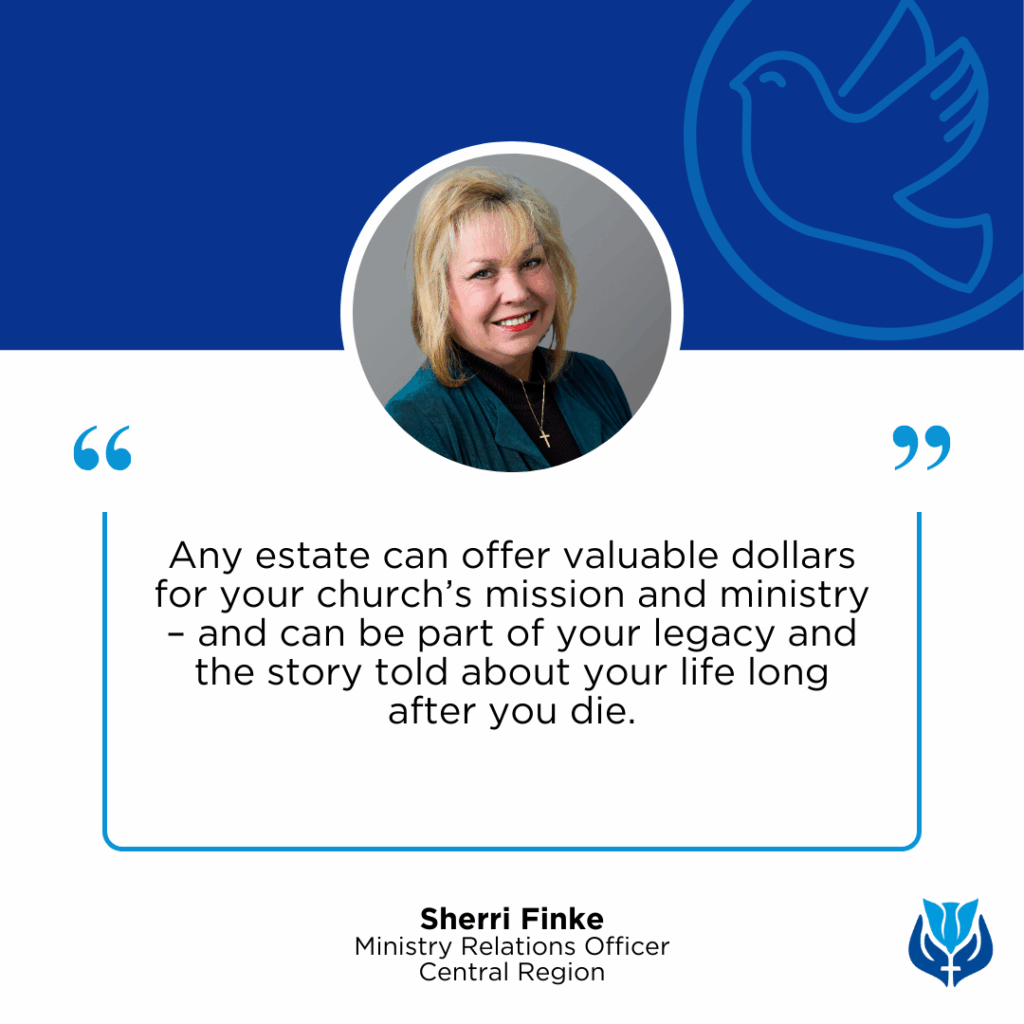
These ideas are not just for the people who will leave behind millions. Any estate can offer valuable dollars for your church’s mission and ministry – and can be part of your legacy and the story told about your life long after you die.
The bottom line to legacy planning can be found in plan, plan, plan. If you want your beneficiaries to know your hopes for the future, make it legal and share it with them. Tell your family how you want your assets divided and why you feel strongly that your faith is a part of your legacy. Clearly sharing your plan with loved ones ensures your dream will be fulfilled and you can truly rest in peace.
We are here at the Foundation to help you with these major decisions. Don’t hesitate to reach out to your Ministry Relations Officer to help you, or to help your church create a legacy giving program.

Sherri Finke
Sherri Finke is the Ministry Relations Officer serving the Central Region which covers the states of Indiana, Illinois, Missouri, and Kansas. She works with congregations to create cultures of generosity, offers seminars and workshops, develops gifts and fundraising plans for ministries, and provides coaching to finance, stewardship and endowment committees.
 English
  Korean
  Spanish