
8/7/2025
Seminaries provide lifelong education and guidance
by Rev. Bill Davis

I am currently enrolled in the Leadership for Wonder doctoral program at Austin Presbyterian Theological Seminary. I’ve had two years of course work and now I have moved on to my capstone project (or dissertation).
This gives me a unique opportunity to view theological education in the PCUSA through two lenses: that of a student, and that of a colleague to seminary leaders as part of my work with the Theological Education Fund. I see both the strategy and guidance of seminary presidents who want to ensure their faculty are free to pursue academic research and theology, as well as faculty who share this research and theology with me as a student. It is a joyful dichotomy that I know is rare.
Austin Seminary assigned a faculty advisor for my capstone project, which is none other than Cynthia Rigby. As many know, she has Parkinson’s, but her brilliance and care for her students shines through in every conversation. She treats me as a trusted conversation partner and colleague as she has guided my academic work, and it humbles me as we progress through my capstone project.
I also had the opportunity to spend time with Anna Carter Florence of Columbia Theological Seminary, where I earned my M.Div., at the recent Presbyterian Association of Musicians conference. We walked the beautiful campus of Montreat Conference Center in the mountains of North Carolina for an hour, and she listened to my plans for this project but also provided incredibly valuable feedback that helped me steer it in a new, and better, direction.
Anna was my advisor over a decade ago at Columbia, but she’s always been available for conversations as I’ve navigated ministry and life ever since.

This is the thing about Presbyterian seminaries: it’s all about relationships. The professors and teachers are providing incredible scholarship that is shared with students in the classroom, but it stretches far beyond that in the accessible books that they write that anyone (seminary educated or not) can read. And it continues through the life-long relationships formed with students. When I am thirsty for knowledge, perspective, or a new theological lens, I can go back to my seminary advisors and professors and drink from that well anytime. In Presbyterian seminaries, once you are a student, you are always a student, and you will find professors and theologians excited to talk to you as a colleague and fellow learner throughout your ministry.
Even scholars whose classes I never took – such as Paul Roberts, who is President of the Justice Center for Sacred Theological Studies (formerly Johnson C. Smith Theological Seminary) – engages me in conversation often as we talk about how the world is moving and our duties in ministry. He challenges me and pushes me in ways that have continued to shape my work, my theology, and my life. I am so grateful for his friendship and his theology that is deeply rooted in the PC(USA).
When you invest across our denomination in Presbyterian seminaries through the Theological Education Fund, know that your gifts support not only the deep learning and theological research that occurs on campus, but the lifelong relationships that pastors and church leaders rely on as they continue in ministry. Your gifts support seminary education nationally at all of our PC(USA) seminaries, and the church and our communities are better for it. Your own church is better for it – and so are you.
If you’d like to talk more about Presbyterian seminaries or making a gift to the Theological Education Fund, please reach out! I’d love to talk to you.
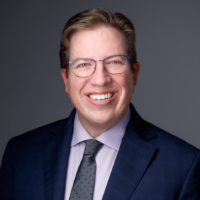
Rev. Bill Davis
Rev. Bill Davis serves as Senior Director of Theological Education Funds Development at the Presbyterian Foundation, raising funds to support PC(USA) seminaries since June 2024. Bill has served Denver Presbytery as a member of Council and co-chair of the Personnel committee. His service to the denomination includes co-directing two weeks of Montreat Youth Conferences and reading ordination exams, a commissioner to General Assembly, as well as being part of the music team for Triennium in 2025.
Currently a doctoral student at Austin Presbyterian Theological Seminary, Bill has degrees from Candler School of Theology at Emory University, Columbia Theological Seminary, and Appalachian State University. A lifelong Presbyterian, he has served churches in Boone, NC, Atlanta, GA, and Denver, CO. Bill received a Religious Fundraising Certificate from the Lake Institute as well as a Certificate in Fund Raising Management from the Lilly Family School of Philanthropy.
 English
  Korean
  Spanish