
5/20/2024
June 16, 2024 – 4th Sunday After Pentecost: Mark 4:26-34
by Rev. Dr. Neal Presa
“God works in mysterious ways.” I’m sure you have heard this said, or perhaps you have said it, thought it, or felt it. God does work in ways that are beyond our thinking and imagining. That is the qualitative difference: God is God and we are not. And so, of course, to us finite creatures, God’s will and God’s ways are not our own. And when God surprises, it is mysterious.
Or is it?
In our Reformed faith traditions, we hold in healthy tension the reality that the living God revealed in Jesus Christ is both hidden and revealed. God is hidden in the sense that God does not disclose to us the fullness of the triune God. Think of Moses and Isaiah confronted with the utter holiness and majesty of God; for the former, he could only withstand seeing the nape of God’s head passing and that was sufficient for Moses to descend from the mountain glowing with effulgent splendor; for the latter, he as a holy prophet was brought to his knees and could only utter “Woe is me, I am a man of unclean lips!” But at the same time, God is revealed. God has disclosed God’s self. God did not stay sequestered in heaven. God came as the person of Jesus Christ and in Spirit-time revealed who God is, who Jesus is, and who we are.
When I hear “God works in mysterious ways,” as a Filipino American I hear my family members saying “Bahala na” which in Tagalog means “Whatever happens.” It’s a saying that expresses either desperate resignation that the present and future will take care of itself that is utterly beyond our control, and/or we recognize and trust that God will do something so utterly wonderful that I can be at peace and not worry about it.
Jesus’s teachings in Scripture through the parables shapes our imagination, and in doing so, discloses to the disciples then and to us now the template pattern of what God is up to. It is true that God doesn’t disclose to us everything about God’s self and about every single thing. To do so would make us God, to do so would utterly overwhelm our finite little brains. But what God does disclose to us is more than sufficient to shape our hearts and minds in the image and heart of God, that the knowledge that God imparts to us calls forth wisdom so that we have a reverence of God, a love for God, a love for people, a love for the world. Jesus’s teaching, the witness of Scripture, the power of the Spirit, and Spirit-time are renovating our lives to notice the patterns of how God usually works, of how circumstances and conditions around us are tending and trending towards God’s loving intentions. Always.
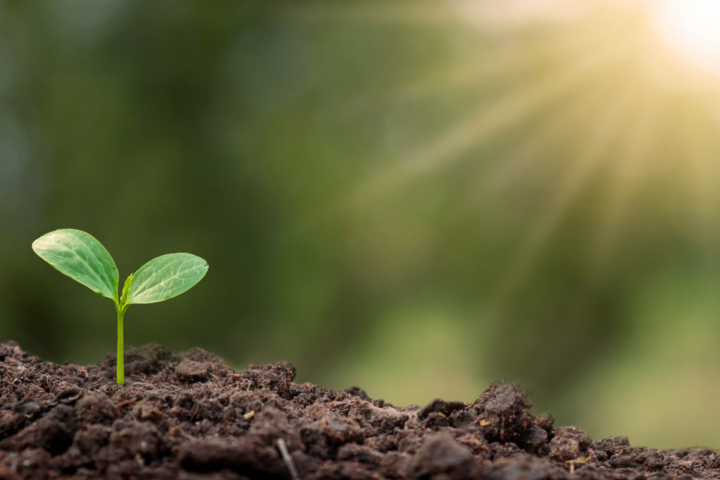
The parables in today’s lection – the parable of the so-called Growing Seed and the parable of the so-called Mustard Seed – describe the kingdom of God as seeds planted, and left on their own, have grown to big plants and big trees. If there was a time-lapse camera, the 1st century A.D./C.E. farmer could see what we in the 21st century can now easily see: the seedling will bloom a tendril into a stalk, into stems, into a trunk, into branches, and with leaves. And all of this happening in Spirit-time. Then the lection adds the following: Jesus continued teaching in this way, for all who would hear and he would teach his disciples in private. In Spirit-time, Jesus teaches his disciples the depth of meaning in the parable. In Spirit-time, Jesus is imparting the reign of God’s love – the kingdom of God for the kin. In Spirit-time, the mysteries of God are displayed and disclosed to us. Even the mysteries that are known, like the known phenomenon of a simple seed growing, still brings awe and wonder. Even though we have seen a little baby grow up to be a young adult, we are still in awe and wonder. We know it. We see it. We experience it. There’s always a sense of mystery because even when we see it, and definitely when we don’t, we know that everything that is happening in our lives and in the world around us are delightfully glorious because of the glorious God who makes it all happen. And we get a front row invitation to behold it and to participate in it.

Rev. Dr. Neal Presa
 English
  Korean
  Spanish