
10/29/2023
Blessing and Benediction from Rev. Rebecca Mallozzi
by Rev. Rebecca Mallozzi
36 “Teacher, which commandment in the law is the greatest?” 37 He said to him, “ ‘You shall love the Lord your God with all your heart and with all your soul and with all your mind.’ 38 This is the greatest and first commandment. 39 And a second is like it: ‘You shall love your neighbor as yourself.’ 40 On these two commandments hang all the Law and the Prophets.” (Matthew 22:36-40)
We are surrounded by rules. Every board game, community, church, school, and organization we ever want to be a part of comes with a set of rules. Some rules are negotiable and others are the hills we live and die by. Some rules are in place for a very good reason and help us live in community with each other. Other rules are in place for the very real attempt to lift some up while keeping others down. And it’s hard to say which rules are the most important.
When some religious leaders ask Jesus to name the most important rules, he could have picked from any of them. There is no shortage of “thou shalt” and “thou shalt nots” in the Bible. Religious people from all backgrounds still wonder which rules are the most important. So what does Jesus say? In Matthew 22, Jesus quotes from Deuteronomy. “Love the Lord your God with all your heart and with all your soul and with all your mind.” And, “You shall love your neighbor as yourself.” Every other rule hangs under the umbrella of those two commandments.
When we think about why our communities of faith do what they do, that is the lens by which we’re meant to decide and act. Our churches are certainly no stranger to rules and policies (Some policies we may not even remember we have. Often we don’t remember why we have certain rules in place except that’s the way we’ve always done it). Are we able to look at the rules and see how the way we do something shows love for God and love for neighbor as self (God and neighbor as self, not or. Jesus didn’t say or!). In what way do we adapt and grow as faith communities with those two greatest commandments in front of us?
We can get bogged down in rules and policies. We can get lost in language and wordsmithing. In the process, do we remember to prayerfully consider how a change or standing rule helps us love God and love neighbor as ourselves better?
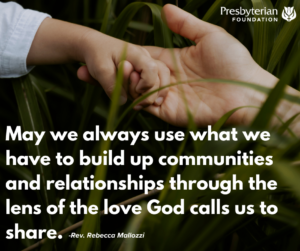
Testing our rules through the lens of love is ongoing work we get to do. Rules are evolving, living things that help build the story of who we are. Using rules as resources to build up communities in love is one way we can be good stewards of God’s love. May we always use what we have to build up communities and relationships through the lens of the love God calls us to share.
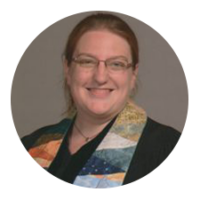
Rev. Rebecca Mallozzi
Rev. Rebecca (Becki) Mallozzi serves as pastor at Faith Presbyterian Church in Emmaus, Pa. She graduated from Waynesburg College (Pennsylvania) with her Bachelor of Arts in English and Communication and worked as a newspaper reporter before starting seminary. She graduated with her Masters of Divinity from Princeton Theological Seminary.
 English
  Korean
  Spanish