
12/18/2025
The end of a season on discernment
by Mike Ferguson
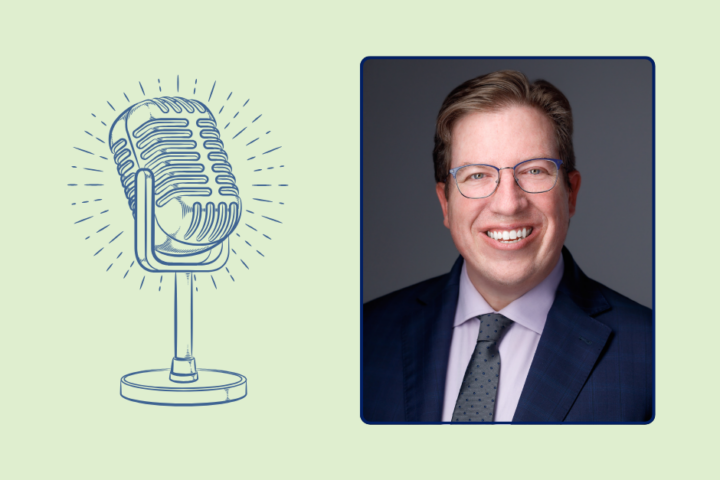
After completing a season of “Leading Theologically” focused on discernment, the Rev. Zoë Garry, associate director of Theological Education Funds Development for the Presbyterian Foundation, invited her colleague, the Rev. Bill Davis, to the final edition this season to explore some of the highlights from five previous editions. Watch the most recent installment here.
Garry asked Davis the question she asked each of the previous guests: At what point in your ministry did discernment become an important practice?
For Davis, it was his first call out of seminary, when he served as an associate program director at Calvin Center, the camp and conference center of the Presbytery of Greater Atlanta. Davis helped launch the Common Soul program, which they spelled both “soul” and “sole,” “pointing out that we share a common faith and a common walk,” he said.
The program was designed to help young adults discern their call into ministry, either inside the church or outside, according to Davis. Young adults in the program worked in roles including environmental education staffers and lifeguards and also in church settings, giving them experience in children and youth ministry. Over three years, about half of the 18 young adults in the program ended up going to seminary while others discerned calls not to attend seminary but stay in the ministry of camps and conference centers.
“Part of discernment is figuring out what God is calling you to do, but also what God is calling you not to do,” Davis told Garry. “Knowing what we’re not gifted or good at is sometimes more important than figuring out what we are good at.”
That reminded Garry of her conversation with the Rev. Dr. Gini Norris-Lane, executive director of UKirk. “Our early 20s is a directional period of many of us,” Garry said. “We can obviously change our life at any moment, but our 20s is a time for pointing us where we’ll go later in life.” She asked Davis: What can we as the wider church learn from UKirk and other young adult ministries like Camp Soul?
One lesson about ministry involving young adults is that “to get critical mass, you have to have partnerships and creativity about thinking outside the box,” Davis said. “The gift of UKirk is it’s a place where people come to ask questions, a place and a space where folks welcome young adults who might not be in school but are working in the town.” It’s also “a place to ask questions of faith — big questions like purpose, why I matter, why my degree matters, and how do I figure out how to live as a faithful follower of Jesus seeking justice, not only for myself but for the community I find myself part of.”
“In order to welcome younger folk into the church, we have to be broadly accepting,” Davis said, “and that’s something UKirks do better than others. I think that is the gift Gini provides the denomination and the world — helping people welcome holistically and whole-heartedly.”
In the second episode with the Rev. Tim Yi, youth pastor at Community Church of Seattle, as her guest, Garry discussed “the intentionality of space” and the creation of “trusted relationships with leaders and with youth.” She asked Davis what he as a parent is looking for in youth groups and children’s ministry.
Davis said one of his children sings each week in a youth choir of about 50 children. There are adults in the room, of course, but high schoolers also attend to mentor students and help each section to come together. “My eldest has gotten to know a high school vocalist really well,” Davis said. “When we talk about discernment, I think about the intergenerational nature of community discernment.”
“I think that’s one of the most important things the church offers,” Garry said, “this intersectional and intergenerational space. I’ve always loved that about churches.”
As part of Garry’s conversation the Rev. Daniel Heath, Davidson College’s associate chaplain and director of the Davidson Forum, Davis thought about vocation, the place where we’re called to work, and avocation, which for Davis is the music “that feeds my soul and gives me energy and life, and yet it’s not the primary work I do.” Avocation can be a hobby or board service, or, for Presbyterians, volunteer work at the mid council or national church level.
“If we don’t have a balance between our vocation and avocation lives,” Davis said, “I think we’re missing what God calls us to.”
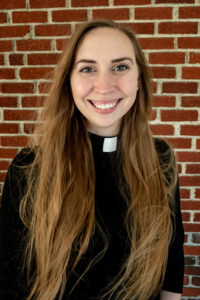
The Rev. Zoë Garry
“It’s about helping other people feel alive too,” Garry said. “So much of our culture is taken with the myth of hyper independence,” that “it’s my life, and I’ve got to take care of myself all by myself. That’s not the truth that the church tells us.” She spoke with the Rev. Ann-Henley Nicholson, Columbia Theological Seminary’s Vice President of Enrollment, who noted that “you don’t have to be everything to step into something,” Garry said. “We’re part of this church that has so many talented people and so many amazing experiences. If you can’t do something, somebody else can.”
Davis then brought up his friend Maria, who taught his confirmation class when he was 13 and invited Davis a few years later to work as a camp counselor at Presbyterian Mo-Ranch Assembly in the Texas Hill Country. After that, she was instrumental in talking Davis into attending Columbia Theological Seminary for the chance to study under luminaries including the Rev. Brian Wren and the Rev. Dr. Rodger Nishioka. “I think about Maria when I think about shared discernment, and about what happens in community with folks we have lifelong relationships with,” Davis said.
The most recent edition before the current installment was one Garry shared with the Rev. Michael Gehrling, associate for Recruitment and Assessment with 1001 New Worshiping Communities. “More and more it’s becoming clear that we can’t do this [work] on our own,” Garry said. “We have incredible resources in our denomination.”
“We as a denomination are willing to go places and do things in response to God’s radical call to love our neighbors,” Davis said. “I think about the resources we have poured into these creative ministries.”
“How is God calling us to faithfully reflect our Presbyterian Reformed witness in the world today? That is an act of discernment,” Davis said. “We discern things individually and we discern organizational structures collectively.” That’s something that occurs every two years at General Assembly, Davis noted. “There is deep discernment work” in “listening to the voice of God for the future of the church.”
“It’s been an absolute delight getting to have these amazing conversations with what I’ve been untangling for this past year: what does it mean to be in conversation with God in this place and time?” Garry said. She thanked Davis “for the opportunity to have been able to explore that this season.”
Learn more about the Theological Education Fund at the Presbyterian Foundation here.
Mike Ferguson
 English
  Korean
  Spanish