
10/16/2025
Preparing and launching a church capital campaign
by John C. Williams
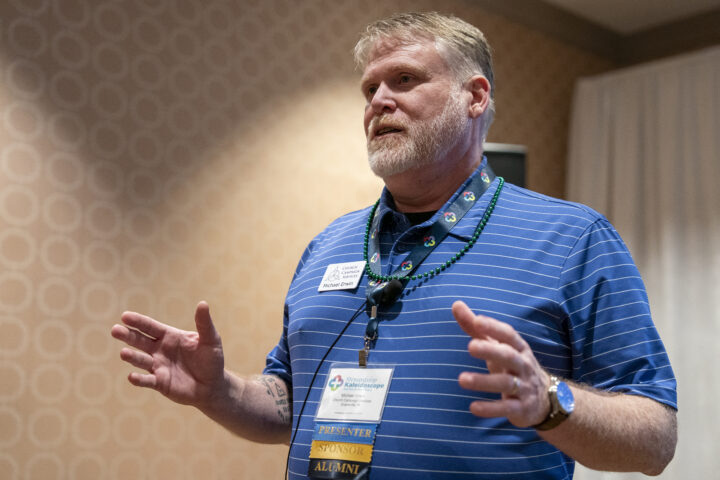
Helping church members exercise their “generosity muscle” and connecting financial goals with spiritual goals can help capital campaigns succeed, Rev. Michael Erwin shared in his Stewardship Kaleidoscope 2025 workshop.
Erwin is executive director for Church Campaign Services, is Pastor of St. Peters UCC in Evansville, IN, was ordained by the Presbytery of Greater Atlanta in 1995 and has been a professional fundraiser since 2010.
Erwin presented a workshop at Stewardship Kaleidoscope in New Orleans. The annual conference is presented by the Presbyterian Church (USA) and Evangelical Lutheran Church in America.
Capital campaigns differ from other fundraising in that they are a time-limited, focused effort to raise funds for a specific purpose, typically construction or infrastructure. These campaigns aren’t just about money, but about vision and mission.
Donors’ gifts typically come from accumulated assets, such as savings or investments, and are apart from any previously budgeted gifts, Irwin said.
“Even though it’s an effort to raise money, it’s also not just about the money,” he said. “A good capital campaign will have a financial goal. The best capital campaigns will also have some spiritual goals.”
Engaging the congregation for a capital campaign should center on:
- Strengthening relationships through storytelling
- Use visuals, history, and hope to explain the need
- Train lay stewards for personal visits with church members
- Expect resistance – and respond with transparency.
Remember the power of one-to-one conversations about the capital campaign, Erwin said. People give to people they trust and the personal ask is the key. Sometimes the best person to make the ask isn’t the church pastor or finance director, but someone who knows the church and community and is a quiet leader.
Also consider having different people available to meet with different church members. A youngish couple might respond better to someone their age with shared connections – just as an older couple might react more positively to someone in similar life circumstances.
“This is sacred work,” Erwin said. “This is an invitation… to be part of something meaningful.” People give when the need and mission are clear. Research, data, charts, engineering reports or architectural renderings all can help tell the story.
Be prepared for questions, Erwin said, and be prepared with answers, or the willingness to find and share answers.
One of the first steps is to create a case document that clearly informs the need for the project, how much money is needed, how it will be borrowed and repaid, and how the project will benefit the church and the greater community.
“A strong case document is not just a list of repairs or new square footage, or renderings of the new fellowship hall,” Erwin said. “The case is a compelling story about your mission, about your vision and about why … you need the new, more professional-type kitchen in your church, how that’s going to impact your community.”
Participating in a capital campaign lets church members have a direct hand in a physical part of the church campus that connects to the spiritual aspects of being a Presbyterian.
John C. Williams
John C. Williams is a veteran writer with his own PR firm specializing in helping K-12 education, government and non-profits tell their story. He is a 30-year member at Sea Island Presbyterian Church in Beaufort, South Carolina.
 English
  Korean
  Spanish