
9/28/2026
Pastoring includes faithful stewardship of church property
by Rev. Eileen Lindner
An undervalued skill in ministry is the capacity to prioritize. Each day offers opportunities for allocating time to meetings, hospital calls, sermon preparation, counseling, civic engagement, staff meetings and the like.
An on-going struggle for many pastors is in reserving time for personal prayer and Bible study to say nothing of family commitments and adequate rest. Little wonder then that issues of church property often take a backseat to dozens of other demands. Indeed, if the church roof isn’t leaking it seldom comes to mind.
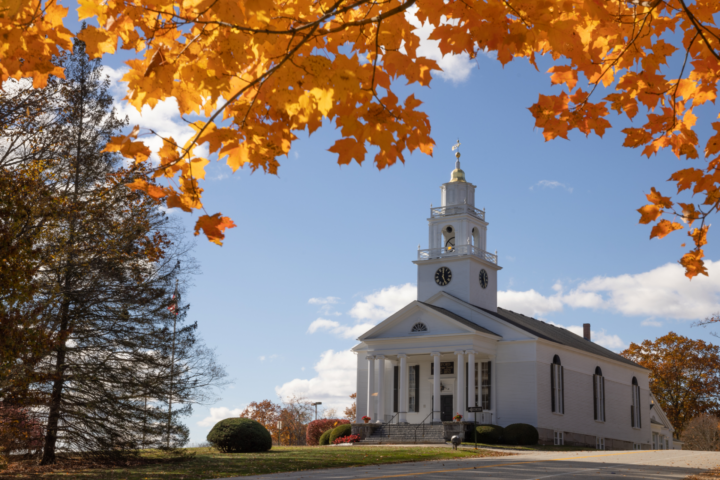
Yet, today the church is confronted with a large and growing challenge regarding property. Faithful stewardship of this our largest financial asset seems, by turns, to be both illusive and potentially a key component of renewed witness and mission for the church of the future.
The origins of the present dilemma are easily identified. Declining membership over the last five decades has diminished funding which in turn has resulted in delayed maintenance of church property. The COVID experience gave rise to online worship and raised new questions about the efficacy and desirability of holding so much property. With less need and more costs, property often comes to be seen as a liability not an asset. As churches merge or close, a property surplus confronts the presbytery with a new and unfamiliar vocation as real estate agent. Today virtually all presbyteries are confronted with the issue of property use and most feel ill-equipped to faithfully address this complex issue.
Recent years have seen a variety of national responses to the challenges inherent in owning so much property. The Presbyterian Foundation some years ago fashioned and launched Project Regeneration, a resource to guide congregations in discerning their futures including use and/or sale of property. Presbyterian Mark Elsdon and his organization, Rooted Good, have brought new insight, energy and resources in enabling churches to discover adaptive uses for church properties that serve the common good. Currently the PC(USA) office on Innovation marshals a number of resources to assist congregations and midcouncils in their stewardship of property. All of these initiatives and many others are valuable beginning points in addressing the current property crises yet fail to match in scale and depth the fullness of the challenge before the church.
Our present property crisis finds us, as a denomination, selling hundreds of millions of dollars’ worth of property each year. We have little or no capacity to estimate whether we are obtaining a fair price in such sales much less evaluate the community impact of our sales on the lives of people and organizations left in the wake of our departure from a community. Perhaps a quarter of the properties under consideration can find new futures in adaptive forms of low and moderate cost housing, or community centers, health clinics or the like. Far more of our unused properties are ill-located or in such poor repair or constrained by historic landmarking and extensive cemeteries that such invigorating futures cannot be imagined let alone be achieved.
Our present circumstance is a generational question of greater magnitude than we have acknowledged and as such lays claim on the church’s best thinking. Moreover, the present context for this challenge is highly local and reminiscent of the book of Judges, “there is no king in the land and everyone does what is right in his own eyes.” Thus, the toll on the PC(USA) of this outmigration of our largest financial asset will be unknown for years to come. Mid-councils struggle with the absence of policy guidelines for such matters as requiring community impact studies prior to sales or clear procedures for the allocation of proceeds from sales.
Perhaps most disturbing and disruptive to the mission and ministry of the church are the theological, moral and ethical issues attendant in these sales. The decision to close a church and sell the property is only the most obvious sign of a deeper spiritual and for many, personal crises.
When church properties are sold or even remain vacant, community members as well as church members are affected by the loss of meeting space or reduction of critical services such as day care, food pantries, etc. Some adaptive change is occasioned by the gentrification of a neighborhood which in turn displaces long term residents. The urgency of addressing these concerns together as a connective church can be seen in the dilemmas confronting mid-councils daily.
Previous efforts as noted above are necessary but not entirely sufficient in addressing these issues faithfully. We might take additional steps by: convening a churchwide conversation, initiating better data collection measures, clearly identifying “best practices” in the transfer of properties and attending to the fatigue and discouragement that lead to quicker but not necessarily best decisions about property. Such efforts might well pay dividends in enabling us to see on a regional or even national basis some more potential for faithful ministry and mission utilizing our property for the common good.
Prioritizing is an undervalued skill in ministry. In our governance it is not even clear what entity or agency might give priority to our questions and opportunities around property. When not otherwise designated such questions belong to the whole church. In this moment the whole church and each of its aspects has a stake in the present and future use of our property, all of which is held in trust to us.
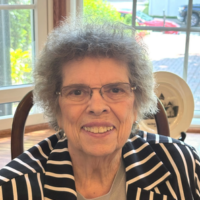
Rev. Eileen Lindner
The Reverend Eileen W. Lindner is an Honorably Retired Minister of Word and Sacrament of the Presbyterian Church (U.S.A.) In her varied career she has served as an Overseas Associate of the PC(USA) in Egypt and Lebanon and has been an active participant in the World Council of Churches in Geneva, Switzerland, serving on the Worship Design Committee for the World Assembly in Canberra, Australia. In the United States she directed the Child Advocacy Office of the National Council of Churches USA. President Jimmy Carter appointed Dr. Lindner to the United States Commission for the International Year of the Child in 1979. She later served the NCCUSA as the Director of Research and Planning and finally as Associate General Secretary.
Lindner holds a Ph.D. degree from Union Theological Seminary in New York and a M.Div. degree from McCormick Theological Seminary in Chicago. She is the author of several books and numerous articles within periodicals.
As a pastor, Lindner has served parishes in Illinois, New York and New Jersey. For a decade she served as Senior Pastor at the Presbyterian Church at Tenafly, NJ. In retirement, Lindner has led a four- year research effort on behalf of the Presbyterian Foundation focused on congregational transitions and property sales.
 English
 Korean
 Spanish